
Digital Marketing Types
What Are the Types of Digital Marketing is a common question for UK businesses that want better leads, stronger trust and clearer growth. The main types are search engine optimisation, pay per click advertising, social media marketing, email marketing, content marketing, local SEO, influencer marketing, affiliate marketing, video marketing and online reputation management. The right mix depends on your goals, your audience, your budget and how soon you need results. If you want a joined up plan from the start, Cleartwo brings strategy, design, technology and marketing together in one place.
Why Digital Marketing Channels Matter
Digital marketing channels matter because each one plays a different role in the customer journey. SEO builds steady visibility. PPC brings fast traffic. Social media creates connection. Email keeps your brand close to people who already know you. When these channels work together, your marketing feels clear, useful and easy to trust.

Many UK businesses waste money because they try every channel at once. It can feel confusing when every platform promises clicks, attention and growth. A better route is to understand what each channel does, then choose the one that fits your next business goal.
Cleartwo helps UK businesses shape digital marketing around real customer behaviour. That might mean SEO for long term visibility, paid ads for fast enquiries, content for trust, or cloud CRM and business automation to turn interest into loyal customers.
What Digital Marketing Means
Digital marketing means using online channels to attract, engage and convert customers. It covers everything from appearing on Google to sending useful emails, running ads, publishing blogs, improving reviews and building a brand presence on social platforms.
Some channels are owned, such as your website, blog and email list. Some are paid, such as Google Ads or social ads. Others are earned, such as reviews, mentions, backlinks and online word of mouth.
Digital advertising is only one part of digital marketing. Advertising buys attention. Digital marketing also earns attention, builds trust and improves the full customer journey. It creates a path where each step feels natural, helpful and worth taking.
Main Types Of Digital Marketing
The main types of digital marketing each serve a clear purpose. Some help people discover your business. Some help them compare choices. Some help them take action when they are ready to buy. Together, they can turn a scattered online presence into a clear brand journey.
Search Engine Optimisation
Search engine optimisation, often called SEO, helps your website appear in organic Google results. Organic means you are not paying for each click. You earn visibility by making your website useful, clear, fast and trustworthy.
SEO includes technical checks, page titles, content, internal links, site structure, authority and user experience. In simple terms, it helps search engines and real people understand what you offer. For a local plumber in Manchester, it might mean service pages and Google Business Profile work. For an ecommerce shop, it might mean product pages, category pages and helpful buying guides.
SEO rarely works overnight. It is more like planting a garden. With steady care, it can grow into a strong source of qualified traffic and leads.
Pay Per Click Advertising
Pay per click advertising, or PPC, lets you pay for visibility on search engines and other platforms. Google Ads is the best known example. You choose keywords, write ads, set budgets and pay when someone clicks.
PPC is useful when you need traffic quickly. A solicitor, dentist, training provider or ecommerce brand can appear in front of people who are already searching. The trade off is simple. When the spend stops, the traffic usually stops too.
Good PPC needs more than a campaign launch. You need conversion tracking, which shows what people do after they click. You also need clear landing pages, testing, negative keywords to block poor searches and careful budget control. If you are comparing costs and returns, Cleartwo's guide on measuring PPC return helps you see which clicks are turning into value.
Social Media Marketing
Social media marketing helps businesses build awareness, connection and trust on platforms such as Instagram, Facebook, TikTok, LinkedIn and YouTube. It can be organic, paid, or a mix of both.
Organic social is where your brand shows its voice day by day. Paid social is where you place the right message in front of a chosen audience. For visual brands, such as fashion, food, beauty and interiors, social media can make a product feel alive.
For B2B firms, LinkedIn can help leaders share insight and start useful conversations. The key is to choose platforms based on your audience, not on what feels popular this month.
Email Marketing
Email marketing is still one of the most valuable digital channels. It reaches people who have already shown interest. It can support newsletters, welcome emails, abandoned basket reminders, event invites and reactivation campaigns.
A small list of engaged contacts is better than a large list of people who never open your messages. Segmenting your audience also helps. A first time buyer, loyal customer and cold lead should not always receive the same message.
UK businesses must handle email consent with care. Before sending direct marketing, check the latest ICO direct marketing guidance so your campaigns respect privacy rules.
Content Marketing
Content marketing means creating useful material that helps customers solve problems. This can include blogs, guides, videos, case studies, podcasts, webinars and downloadable resources.
Good content does not shout for attention. It earns it. A helpful guide can support SEO, feed social media, give sales teams better answers and give email campaigns something useful to share.
For example, one strong guide can become a blog, a short video, a social post, an email series and a sales conversation starter. You can explore this idea further in Cleartwo's blog on how content marketing supports digital marketing.
Influencer And Affiliate Marketing
Influencer marketing uses creators to promote a brand, product or service to their audience. It works best when the creator has real trust, not just a large follower count. A smaller creator with a loyal UK audience can be more valuable than a celebrity with weak engagement.
Affiliate marketing is slightly different. Affiliates earn a commission when they send traffic or sales. This can work well for ecommerce marketing, but it needs clear terms, tracking links and careful partner selection.
Both channels need brand safety. The creator or affiliate becomes part of your story. Their tone, values and audience should feel right for your business.
Local SEO And Online Reputation Management
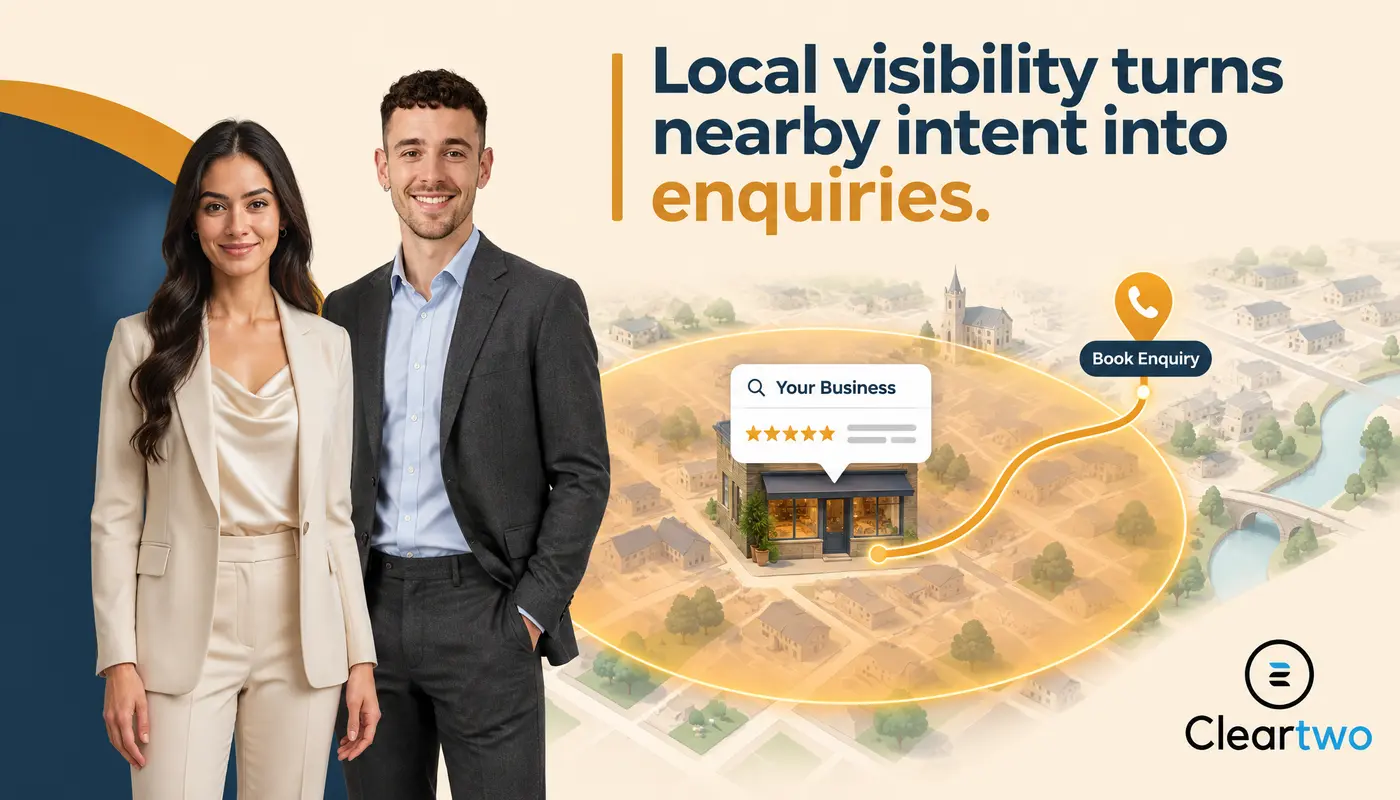
Local SEO helps your business appear when people search in a specific area. Searches like accountant near me or best cafe in Stockport often lead to local results, maps and reviews.
Google Business Profile is central here. Your name, address, phone number, opening hours, services, photos and reviews all matter. Reviews are not just stars on a screen. They are trust signals at the moment someone is deciding whether to call.
Online reputation management means asking for genuine reviews, responding in a professional way and learning from customer feedback. A thoughtful reply to a negative review can show future customers that your business listens.
Video, Mobile, SMS And Newer Channels
Video marketing is growing because people like to see and hear a brand before they buy. Product demos, behind the scenes clips, customer stories and explainers can all build confidence.
Mobile marketing includes fast mobile websites, SMS, messaging and app based experiences. These channels need care because they feel personal. The message must be useful, timely and welcome.
AI driven tools are also changing how businesses research audiences, draft ideas and review performance. Used well, they support creative thinking. They do not replace brand judgement, customer care or the human eye for what feels right.
How To Choose The Right Digital Marketing Channel First
The best first channel depends on your business goal. If you need enquiries this month, PPC and paid social may help you test demand. If you want steady long term visibility, SEO and content marketing are often better foundations.
Think about where your customers spend time. A local trades business may need local SEO and reviews first. A fashion brand may start with social, video and influencer content. A B2B consultancy may need SEO, LinkedIn, expert content and email nurturing.
- Clear business goal
- Known customer journey
- Realistic monthly budget
- Strong landing pages
- Useful tracking setup
- Consistent brand voice
- Regular performance reviews
These foundations help you choose digital marketing channels with purpose. They also make your online marketing easier to measure. This is true whether you are building organic search visibility, using paid search advertising, or shaping customer acquisition channels around the people you most want to reach.
SEO Vs PPC For UK Businesses
SEO and PPC are not rivals. They are different tools. PPC gives quick visibility and controlled testing. SEO builds trust, authority and organic search visibility over time.
PPC is useful when you need data fast. You can test offers, landing pages and search demand. SEO then helps you build a stronger presence around the topics that matter most.
The best strategy often uses both. Paid search advertising captures demand now. SEO and content create a stronger base for future growth.
How Digital Channels Work Together
The strongest digital marketing feels cohesive. A customer might discover you on social media, read a guide on your website, search your brand on Google, check reviews, join your email list and then book a call.
This is why design with intention matters. Your website, ads, emails and content should feel like parts of the same story. If every channel looks and sounds different, customers can feel unsure.
For businesses that need website work alongside marketing, web development services from Cleartwo can connect design, performance and conversion. That matters because traffic is only useful when the website helps people take the next step.
How To Measure Digital Marketing Performance
Do not judge every channel by the same number. SEO might be measured through rankings, impressions, clicks, qualified traffic and leads. PPC might be judged by cost per click, conversion rate, cost per lead and return on ad spend.
Social media can be measured through reach, engagement, saves, video views, leads and assisted sales. Email can be measured through delivery rate, open rate, click rate, unsubscribes, conversions and revenue per recipient.
Analytics is the process of reading the clues your customers leave behind. It is not perfect. People use different devices, reject cookies, return later and speak to sales offline. Still, steady tracking gives you a clearer picture than guessing.
Common Digital Marketing Mistakes To Avoid
The first mistake is trying to do everything at once. This spreads budget, time and attention too thin. If you are posting, advertising and emailing but still do not know what works, you are not alone. It is better to focus on a small number of channels and do them well.
The second mistake is treating traffic as the final goal. Traffic is only the doorway. You still need strong messaging, useful pages, clear calls to action and a smooth sales process.
The third mistake is ignoring the systems behind the marketing. Custom CRM systems, cloud CRM, business automation, IT support for businesses and IT security for SMEs can all affect how well leads are handled after they arrive. A CRM is a place to keep customer information organised, so good opportunities do not slip through the cracks.
How Cleartwo Delivers Digital Marketing Under One Roof
Cleartwo helps UK businesses combine the right channels into one practical strategy. That can include SEO, PPC, social media, email, content, local SEO, web design, analytics, AI driven tools and CRM support.
The value of having everything under one roof is clarity. You are not trying to stitch separate ideas together or translate between different teams. Your website, campaigns, data and systems can move in the same direction. This gives you more confidence and less stress.
The process starts with discovery. Who are your customers? What do they search for? What stops them buying? Which channels already work? Which ones are draining budget without enough return?
From there, Cleartwo can shape a joined up plan with campaign setup, creative direction, tracking, reporting and ongoing optimisation. Not every business needs every channel. The aim is to choose the right mix and make every detail matter.
A Final Thought
Digital marketing works best when it feels intentional. You do not need to be everywhere at once. You need the right story, told in the right places, with enough clarity for customers to trust the next step. Create something useful, thoughtful and built to grow.
Frequently Asked Questions
What Are The Seven Main Types Of Digital Marketing?
The seven main types are SEO, PPC, social media marketing, email marketing, content marketing, affiliate marketing and local SEO. Many businesses also use video, influencer campaigns and reputation management.
What Is The Most Effective Type Of Digital Marketing?
There is no single best channel for every business. SEO is strong for long term visibility. PPC is useful for fast traffic. Email is powerful for customer retention.
Is SEO Better Than PPC?
SEO is better for sustainable organic growth. PPC is better for quick testing and immediate visibility. Many UK businesses get the best results by using both together.
How Long Does SEO Take To Work?
SEO often takes several months to show meaningful progress, especially in competitive markets. The results can build over time if the website, content and authority improve steadily.
Can Small Businesses Manage Digital Marketing In House?
Yes, small businesses can manage some activity in house. This may include social posts, email updates and simple content. A specialist partner can help when strategy, tracking, SEO, PPC or technical work becomes too complex.