
Introduction
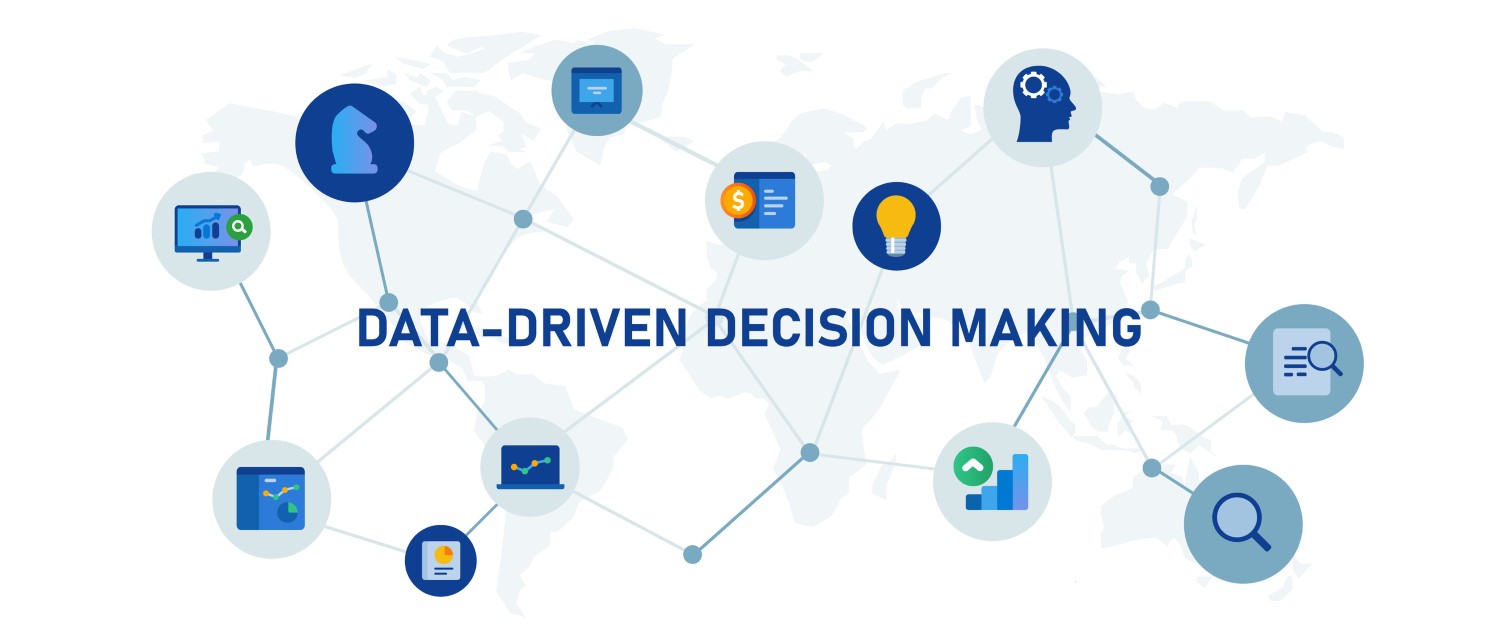
In today’s fast-paced business environment, just having an instinct is not enough. Companies that flourish are the ones making IQ decisions based on the authentic information coupled with actionable insights. Customer Relationship Management (CRM) systems are now robust tools that gather, organize, and analyze customer information, which in turn, grant businesses the power to make informed and strategy based decisions.
Utilizing CRM analytics, companies are better able to see potentials, perfect strategies, and spur substantial growth. This article discusses how organizations can apply CRM for the purpose of changing data into meaningful insights, which then influences the choice of management and the growth of the business.
How CRM Supports Data-Driven Decisions
1. Centralized Data Collection
CRM applications integrate different sources of customer data like sales calls, emails, social networks, support tickets, and purchases into a congested system. This is possible due to central data which gives decision-makers a complete and reliable customer path visualization.
Tip: Always keep your CRM data recent and free from contamination if you want to have reliable data and not to mislead insights.
2. Actionable Analytics
The latest CRMs deliver dashboards, reports, and analytics tools that make direct reports more insightful. Firms can watch their sales performance, customer behavior, campaign productivity, and the general operational efficiency.
Tip: The use of visual dashboards makes it easy to overview key performance indicators (KPIs) and take decisions without much effort.
3. Forecasting and Predictive Insights
CRM technologies integrated with AI and predictive analytics can recognize patterns related to trends, customer behavior, and sales opportunities therefore, allowing businesses to make better decisions in terms of resources, marketing, and adjusting to the market.
Tip: Embrace predictive lead scoring to focus on the right leads and hence maximize conversion.
4. Personalized Customer Strategies
CRM data analysis helps businesses to create groups with similar customers whom they can market their commodities through, giving personal offers, and that would increase the customer trust and loyalty.
Tip: By segmenting your CRM customers, you can map specific campaigns aimed at different customer groups that resonate.
5. Enhanced Sales and Marketing Alignment
The gap between sales and marketing is filled by CRM analytics as they provide the respective teams with shared insight into the customer’s spending habits, lead quality, and campaign effectiveness. The conjunction ensures that both work towards the same goal which is to increase the company profits.
Tip: Auto-report your CRM so that the marketing channel with the most qualified leads for your sales teams can be identified easily.
6. Continuous Improvement Through Insights
The structures of CRM systems permit firms to observe their performance within a certain period, discover constraints, and remodel the strategies. The iterative process will foster continuous improvement and nevertheless will ensure the growth is steadfast.
Tip: Arrange frequent reviews of CRM data to achieve the optimization of the workflows, the campaigns, and the customer engagement strategies.
Benefits of Data-Driven CRM Decisions
-
Improved Accuracy – Decisions are based on factual data rather than guesswork.
-
Higher Efficiency – Teams can focus on high-impact activities guided by insights.
-
Increased Revenue – Data-driven strategies enhance targeting, conversion, and retention.
-
Better Customer Experience – Personalized engagement strengthens loyalty and satisfaction.
-
Scalable Growth – Insights help businesses plan strategically and allocate resources effectively.
FAQs About Leveraging CRM for Growth
Q1: Can small businesses benefit from data-driven CRM decisions?
A: Yes. Even small businesses can use CRM analytics to identify opportunities, streamline operations, and improve customer engagement.
Q2: How often should CRM data be analyzed?
A: Data should be reviewed continuously for daily operations, with periodic in-depth analysis monthly or quarterly for strategic decisions.
Q3: Can CRM predict future customer behavior?
A: Modern CRM systems with AI and predictive analytics can forecast trends, customer needs, and sales opportunities, helping businesses plan ahead.
Q4: Does using CRM for data-driven decisions replace human judgment?
A: No. CRM provides insights to support decision-making, but human expertise is essential for strategy and contextual understanding.
Conclusion
In this age, managing data is the key to the growth of a business, and it is high time companies adopted CRM for making data-driven decisions. By integrating the information, analyzing the behaviors, predicting the trends, and refining the strategies, businesses are capable of making accurate decisions that make the company expand and the customers highly satisfied.
CRM alters data into actionable intelligence, hence, equipping businesses with the power to make judicious decisions, become efficient, and attain the growth that is sustainable.