
Visualising Your Google Ads Fund In The UK
How much should you set aside for Google Ads in the UK. It can feel like a blank canvas. Exciting. A little unclear. Full of promise.
Every click is like a small doorway. Each one opens a chance to meet a new customer and begin a new chapter for your brand. Knowing your budget helps you choose the right doors with intention. Whether you are shaping your broader digital marketing strategy or exploring paid advertising options, this guide grounds your ideas in clear figures.
At Cleartwo, we see Google Ads as more than a spend. They are a design challenge. A blend of message, timing and feeling. Here, we explore the facts so you can craft your budget with intention and clarity.
Decoding Google Ads Pricing Architecture In The UK
Think of Google Ads as a quiet gallery. Advertisers place their bids like gentle brush strokes. Google studies each one and chooses the most relevant to display, like artwork that catches the light.
You only pay when someone clicks. This is called cost per click or CPC. There is no fixed fee. Your cost shifts based on competition, ad relevance and the quality of your landing page. Google explains this clearly in their Google Ads Help documentation.
When your landing page is simple, clear and helpful, your Quality Score rises. A strong Quality Score often lowers costs. This is why thoughtful web design and UX design matter. They quietly support every penny you spend.
Common Cost Per Click Rates By Sector In The UK
Different industries have different CPC levels. Some are busy like city streets. Others are calm like quiet side roads.
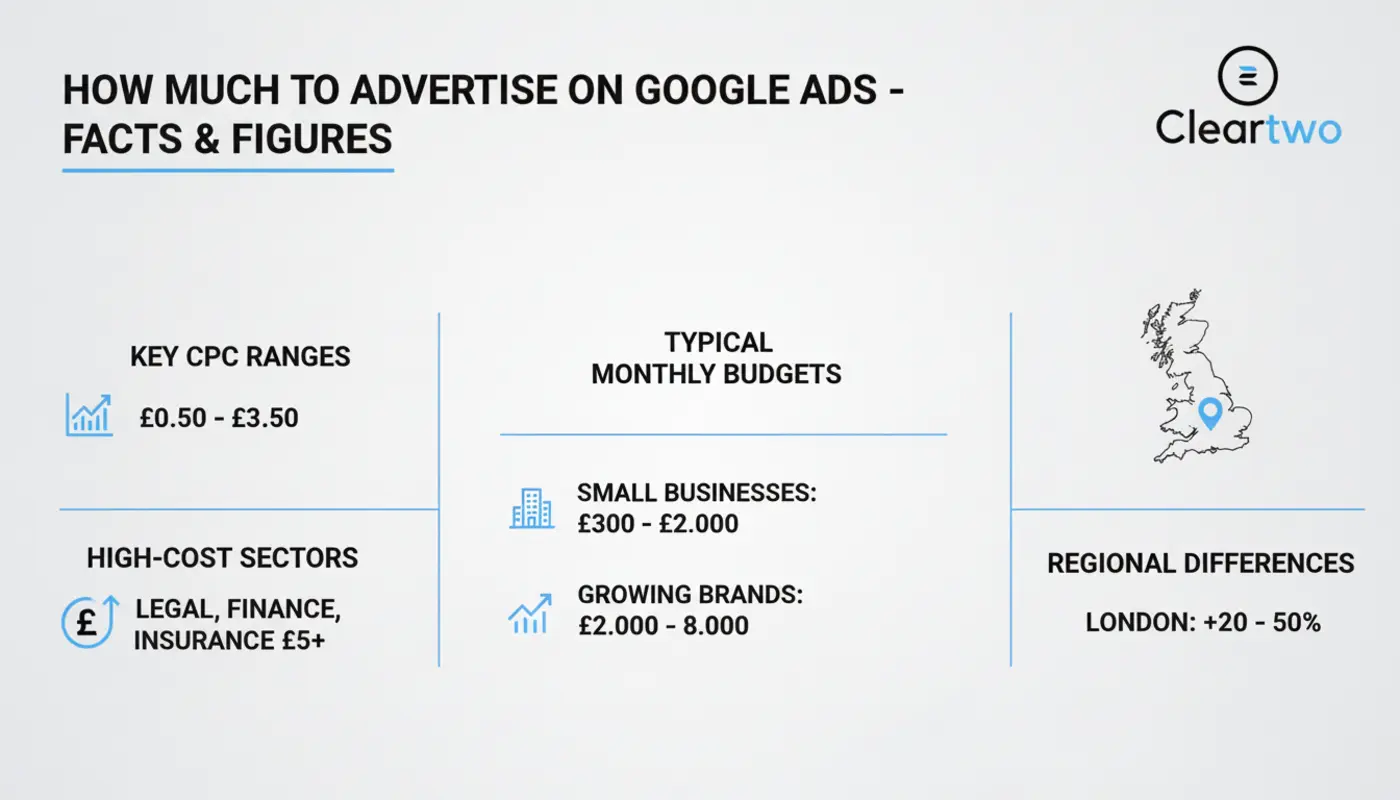
In the UK, CPC averages between £0.50 and £3.50. Sectors such as legal, finance and insurance often cost the most, sometimes above £5 per click. Creative industries and ecommerce tend to offer lower costs.
Statista shows that insurance and legal stay at the top, while retail and pharma sit lower. These ranges serve as helpful guideposts and support your choices in analytics planning.
Conventional Monthly Google Ads Budgets For UK Companies
Budgets should fit your goals like a tailored suit. They should reflect who you are and what you want to achieve.
Small UK businesses often spend between £300 and £2,000 each month. Growing brands may set aside £2,000 to £8,000. National campaigns usually invest more. What matters most is the balance between your aims and your resources.
If you are just starting out, focus on strong foundations. Improve your landing pages through landing page design to help every click count. You can read more in our guide on optimising PPC landing pages.
Regional Differences Of Google Ads Costs In The UK
Location gently shapes cost. London clicks often cost 20 to 50 percent more than rural areas. Cities such as Manchester, Birmingham and Leeds tend to sit in the middle.
Higher costs simply reflect higher demand. Local relevance remains essential. Tailored messaging and local landing pages, like those we create for London campaigns, often lead to better results.
Think of each region as its own character. Speak to it in its own tone.
Cost Of Search Ads Compared To Display Ads In The UK
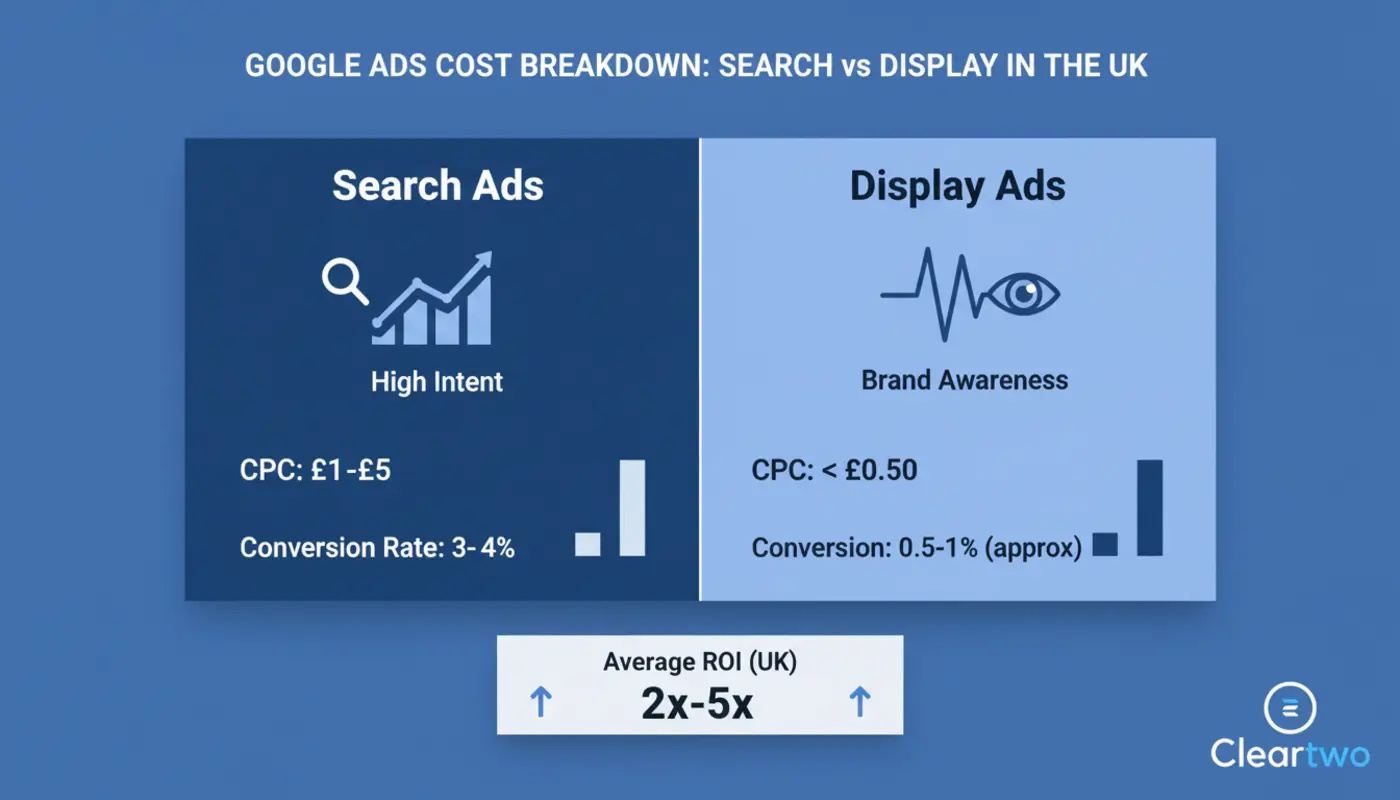
Search ads answer a direct question at just the right moment. They often cost more, usually between £1 and £5 per click.
Display ads are more like gentle visual moments along a journey. They tend to cost less and can even fall below £0.50 per click.
Brands often achieve the best results by using both. Search captures intent. Display builds feeling and presence. This balance mirrors the approach we use in creative branding and campaign design.
Google Ads For Small Firms In The UK
Small firms do not need large budgets. They need clear focus and strong intention.
A monthly spend of £500 to £1,000 can work well when matched with sharp targeting and good offers. CRM tools help you follow leads with care.
Automation can also support you. These tools help you manage time and reduce wasted spend. Find more support in our digital marketing guide for UK businesses.
Industry Specific Google Ads Benchmarks Across The UK
Here is a brief list of sectors that help guide your expectations:
- Legal services
- Financial products
- Home services
- Ecommerce retail
- Healthcare
- Education
- Creative industries
Legal and finance often cost the most. Ecommerce and creative sectors tend to be more accessible. Understanding where you fit helps shape your goals.
Key Drivers Of Google Ads Investment In The UK
Many elements influence your final costs.
Competition, Quality Score, season, site speed and clarity all matter. Strong IT support and thoughtful web development can quietly improve your ad results.
Your ads are part of a wider digital ecosystem. They rely on design, technology and trust.
Conversion Rate And ROI For UK Advertisers
Search ads in the UK convert at around 3 to 4 percent on average. Some sectors perform higher and some lower.
ROI often falls between 2x and 5x when ads are well managed. Strong offers and timely follow-ups can raise this further.
Good design helps remove barriers. Clear words build trust. Here, numbers and emotion work together.
Future Outlook Of Google Ads Costs In The UK Market
Google Ads costs may rise in the future. Automated bidding and new campaign types are shaping this space. Performance Max blends formats and places more weight on your creative assets.
This makes branding and design more important. Thoughtful ads stand out. Cold or unclear ads fade quickly.
Now is the moment to invest in strong creativity, smart systems and steady digital marketing support.
Most Frequently Asked Questions
Is There A Minimum Spend For Google Ads In The UK
No. You can begin with any daily budget and increase it when you are ready.
Are Google Ads Worth It For Small UK Businesses
Yes. When they are well targeted and paired with good design and steady follow up.
Why Do Google Ads Cost More In London
Demand is higher and competition is stronger. This lifts the price.
Can Display Ads Work As Well As Search Ads
They serve different roles. Display builds awareness. Search captures intent.
What Ways Are Available To Reduce Google Ads Costs
Improve relevance. Refine targeting. Strengthen your landing pages and user experience.