
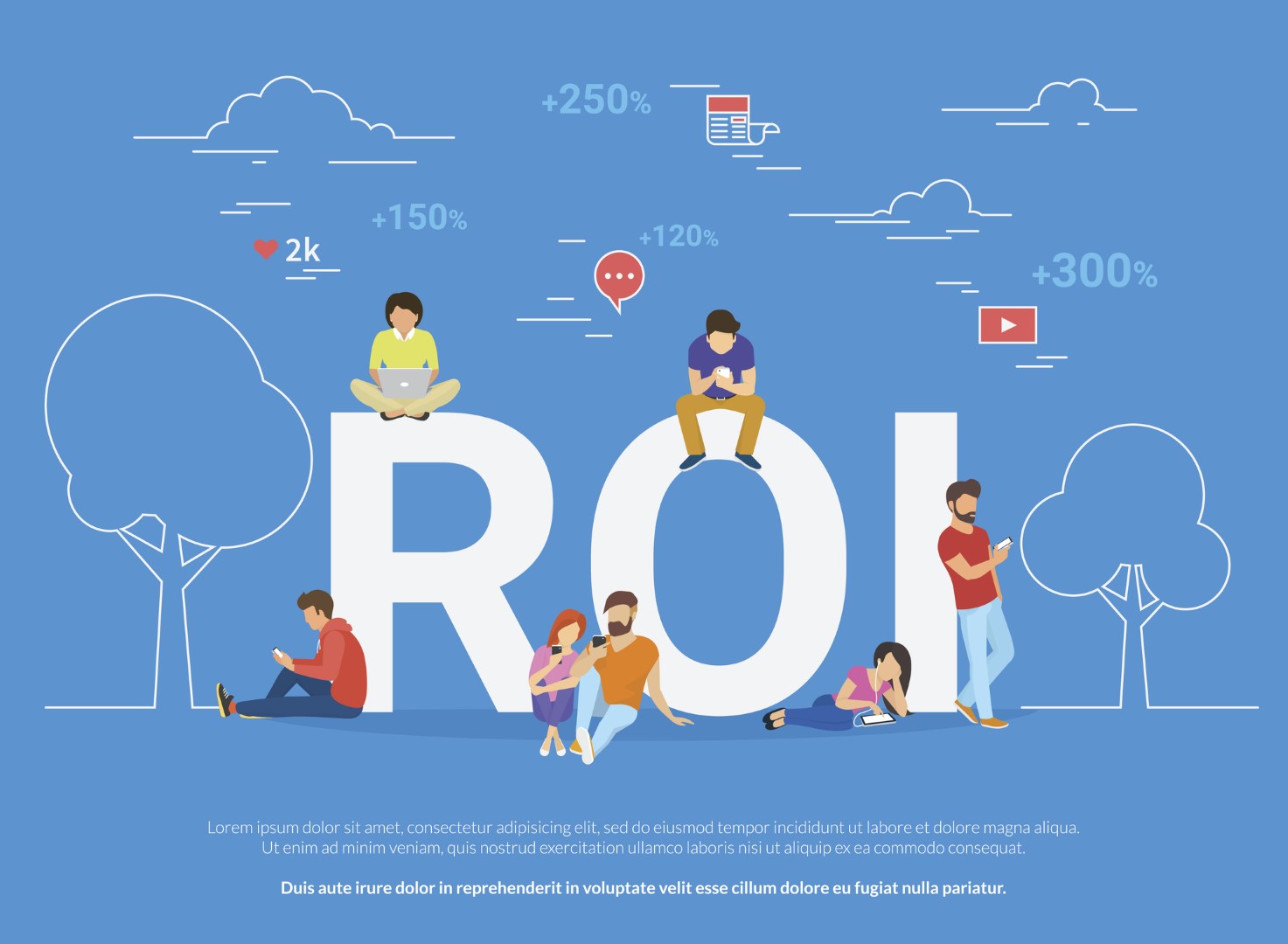
Intro. Social media is a useful tool for gaining customers. However, it is hard to ascertain if achieving your goal is possible without measuring return on investment (ROI). Social media ROI is a standard that you can use to assess the effectiveness of your campaigns. In particular, it shows the time, money, and resources you invested and what you have gained in return. This guide provides step-by-step instructions and helpful tips on how to measure social media ROI precisely and accordingly, allowing you to maximize returns and optimize your strategy.
1. Set Clear Goals
Before calculating the ROI, it is important to have a clear picture of what the success looks like.
-
SMART Goals: Specific, Measurable, Achievable, Relevant, and Time-bound goals can be a good performance tracker.
-
For example: Increasing the number of visitors to the website, marketing leads, sales, brand awareness, or people interaction.
-
Link Goals to Business Objectives: Social media activities should be aligned with overall business goals.
2. Monitor Key Performance Indicators (KPIs)
Decide on the essential metrics for your objectives.
-
Engagement Metrics: Likes, shares, comments, mentions, and saves.
-
Reach Metrics: Impressions, follower growth, and content reach.
-
Conversion Metrics: Click-through rates, leads, and sales.
-
Customer Metrics: Retention, repeat purchases, and lifetime value.
3. Get Analytics Tools
Numbers are at the core of social media ROI.
-
Built-in Analytics: Instagram Insights, Facebook Analytics, LinkedIn Analytics, Twitter/X Analytics, TikTok Analytics.
-
Third-Party Tools: Hootsuite, Sprout Social, Buffer, Google Analytics.
-
Tracking Links: UTM parameters to track traffic and conversions from campaigns.
4. Measure Social Media ROI
Now that you have data, the next step is to compute the ROI to check the efficiency.
-
ROI Formula:
[
ROI = frac{text{Revenue from Social Media} – text{Cost of Social Media Investment}}{text{Cost of Social Media Investment}} times 100
] -
Include Your Costs: Paid ads, content creation, tools, and employee time are the key ones.
-
Revenue Attribution: What campaigns contribute most to the sales leads.
5. Assess Benefits That Can’t be Quantified
Not all the ROI is in form of money; some of the benefits take more effort to determine but are just as valuable.
-
Brand Awareness: The atemp to mention, share, and to reach is a good sign of a company’s presence.
-
Customer Sentiment: Customers’ positive comments, good reviews, the involvement of the customers in the content creation, are results of the customers’ loyalty.
-
Relationship Development: Better engagement and community growth may translate into long-term benefits for the business.
6. Make Changes to Your Strategy
Feedback serves as the basis for improving your social media campaigns.
-
Spot the Winning Content: Devote your efforts to the posts, formats, and campaigns that achieve satisfactory outcomes.
-
Maximize Ad Spend: Disburse your money to the highest-performing channels and campaigns.
-
Refine Targeting: Fine-tune audience targeting by utilizing data analysis.
Summary
The measurement of social media ROI can be done correctly only through the proper implementation of the steps. This way you will get to understand the direct and indirect outcomes of your interventions, leading to rational decision-making. The process includes the following: clarify your aims, monitor the important indicators, use the analytical tools, compute the ROI, assess the qualitative impact, and rectify the strategies. The systematic checking and alteration will make sure that all your endeavors will be resulted in business growth and profit.
Frequently Asked Questions (FAQs)
Q1: What is social media ROI? Social media ROI is the calculation of the return on investment from using social media platforms in terms of time spent, money expended, and resources utilized to get measurable results.
Q2: Which metrics should I track for ROI? Track engagement, reach, conversions, revenue, customer retention, and other KPIs aligned with your goals.
Q3: How often should I measure social media ROI? Measure ROI regularly—monthly or quarterly—to evaluate performance, optimize campaigns, and adjust strategies.
Q4: Can social media ROI include non-monetary benefits? Yes, qualitative impacts such as brand awareness, customer engagement, and community growth are important aspects of ROI.
Q5: What tools can help measure social media ROI? Use platform analytics (Instagram Insights, Facebook Analytics), third-party tools (Hootsuite, Sprout Social, Buffer), and Google Analytics for tracking conversions.