

Digital marketing includes every online activity used to reach, attract, convert, and retain customers. It covers SEO, paid ads, social media, email, content, websites, user experience, conversion rate optimisation, analytics, automation, affiliate activity, influencer campaigns, and customer relationship tools.
Here’s the thing. Digital marketing is not just posting on Instagram or running a few adverts. It is the full system that helps people find you, trust you, contact you, buy from you, and come back again. If you want that system built properly, Cleartwo helps UK businesses bring strategy, creative work, technology, and marketing together. That way, every channel works towards the same commercial goal.
Digital Marketing Umbrella
The digital marketing umbrella covers the channels, platforms, tools, content, data, and customer journeys that happen through digital touchpoints. The channel is the route. The platform is the place. The asset is what people interact with.
For example, search is a channel. Google is a platform. Your landing page is an asset. Email is a channel. Your newsletter is an asset. Social media is a channel. LinkedIn, TikTok, Instagram, YouTube, and Facebook are platforms.
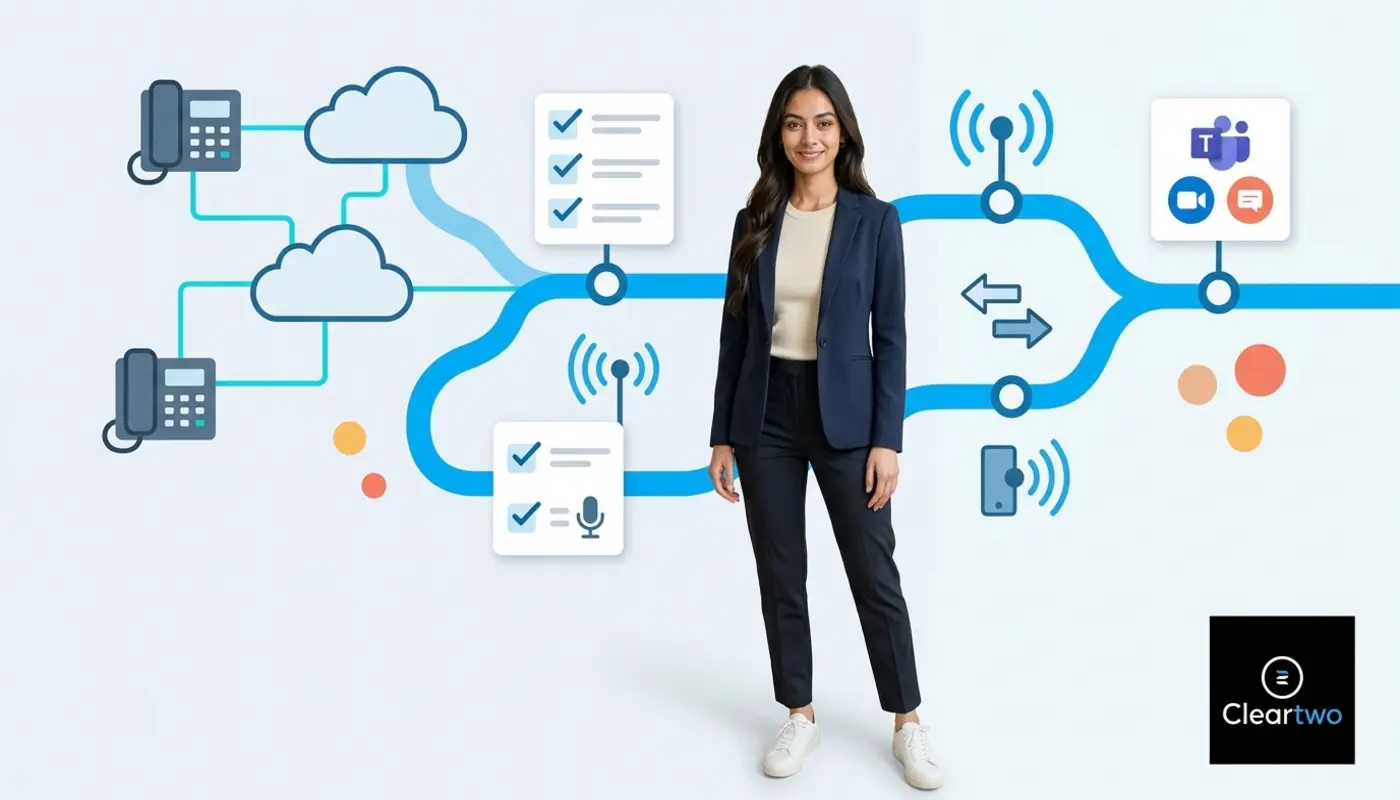
This matters because many businesses only focus on the visible parts. They run paid ads or post content. But they forget the website, tracking, email follow up, CRM, and conversion journey. Are you getting traffic but not enough enquiries? That is often a sign that the channels are active, but the system behind them is not joined up.
What actually happens is simple. Traffic arrives, but the process behind it does not turn that attention into revenue. Many businesses are not short of effort. They are short of a clear and connected process.
Digital marketing also overlaps with web development services, IT support for businesses, cloud CRM, custom CRM systems, and business automation. That is why a joined up approach matters. Your marketing cannot perform properly if your website is slow, your tracking is broken, your CRM is messy, or your team has no clear follow up process.
What Comes Under Digital Marketing
What Comes Under Digital Marketing in a practical UK strategy is a mix of traffic channels, conversion tools, data systems, and retention activity. The goal is not to use every channel at once. The goal is to choose the right mix for your audience, budget, margins, and growth stage.
 At a basic level, most businesses need these core areas covered:
- Search engine optimisation
- Pay per click
- Social media marketing
- Email marketing campaigns
- Content marketing strategy
- Website user experience
- Analytics and reporting
You can then add influencer marketing, affiliate marketing, ecommerce marketing, AI marketing tools, video, remarketing, SMS, digital signage, and advanced automation when the foundations are in place. That is the real talk. Extra channels work better when the basics are already strong.
Search Engine Optimisation
Before you spend more money on ads, ask yourself this. Can people already find you when they search for what you sell? If not, SEO needs attention.
Search engine optimisation, often called SEO, helps your website appear when people search for your products, services, locations, and common questions. For many UK firms, SEO is the foundation because it reaches people with clear intent. They are not just scrolling. They are actively looking.
SEO includes technical improvements, useful content, keyword research, internal linking, local search, authority building, and page experience. Technical SEO means helping search engines crawl and understand your site. Content SEO means answering the right questions clearly. Local SEO means showing up for searches such as plumbers in Stockport, solicitors in Manchester, or ecommerce agency London.
A local service business might get plenty of organic visitors from Google. But it can still lose enquiries if nobody follows up quickly. That is why SEO cannot sit on its own. It needs landing pages, forms, tracking, and a follow up process that works.
SEO is not an overnight play. A proper campaign can take months to show strong results. Anyone promising instant top rankings is guessing or taking risks. But when SEO starts working, it builds a long term asset. It supports almost every other digital channel.
If you want to go deeper into the role of search, Cleartwo has a useful guide on how SEO supports digital marketing. It breaks down why visibility, trust, and content all connect.
Pay Per Click And Paid Search
Need leads faster while your organic visibility builds? That is where pay per click can help. But it needs control.
Pay per click means you pay when someone clicks your advert. Google Ads is the most common example for UK businesses. It puts your offer in front of people searching right now. It is powerful, but it needs careful management.
Pay per click works well when you have clear search demand, a strong offer, good margins, and a landing page that converts. It is not just about spending more. It is about targeting the right keywords, writing clear ad copy, tracking conversions, and improving the page people land on.
Many businesses use paid search to test demand while SEO builds in the background. A B2B company might run Google Ads for high intent service searches. At the same time, it can build organic content around buyer questions. That gives short term leads and long term visibility.
An ecommerce brand might spend heavily on ads but still lose sales because the checkout feels confusing on mobile. In that case, the ad campaign is not the only issue. The buying journey needs fixing too.
The mistake is treating paid search as a standalone fix. If your website is confusing, your forms are weak, or your follow up is slow, your ad budget leaks. Paid search needs SEO, user experience, conversion work, and CRM support to perform properly.
Social Media Marketing
Social media marketing covers organic content, paid social ads, community engagement, short videos, live content, social selling, and brand storytelling. For UK businesses, the right platform depends on the audience. LinkedIn suits B2B. Instagram and TikTok suit visual brands. Facebook still works for local communities. YouTube supports education and search.
Organic social builds familiarity. Paid social expands reach. The best campaigns use both. You might post helpful videos, share client results, run retargeting ads, and send people towards a useful guide or landing page.
Social media also supports SEO and content marketing. A blog can become a LinkedIn post. A video can become a reel. A customer question can become a short explainer. That is how you get more value from every idea.
If you need practical support with platform choice, content planning, and paid activity, Cleartwo provides digital marketing solutions that connect social activity with wider business goals, not vanity metrics.
Email Marketing
Email marketing remains one of the most valuable digital marketing channels because you own the relationship. You are not relying only on an algorithm to show your message. You are speaking to people who have already shown interest.
Email supports lead nurturing, product launches, customer retention, abandoned basket recovery, service reminders, event invites, and loyalty campaigns. For ecommerce brands, it can drive repeat purchases. For B2B firms, it can keep prospects warm until they are ready to speak.
A B2B firm might have prospects who take three to six months before making a decision. A simple email sequence can keep those people informed. It can answer common questions, share proof, and make the sales conversation easier when they are ready.
The key is segmentation. That means grouping people based on behaviour, interest, stage, or customer type. A new lead should not get the same message as a repeat buyer. A cold enquiry should not receive the same content as a long term client.
UK businesses also need to respect privacy and consent. For direct marketing rules, the GOV.UK direct marketing guidance is a useful starting point. Keep it clean, clear, and permission based.
Content Marketing
Content marketing is how businesses use helpful articles, guides, videos, case studies, podcasts, downloads, and landing pages to attract and convert customers. It gives your audience answers before they speak to your sales team.
Blogs help SEO. Videos help social media and YouTube. Guides help lead generation. Case studies build trust. Product pages support ecommerce marketing. Good content does not just fill a website. It answers real questions your buyers already have.
Let me break this down. If a facilities management company writes a guide on reducing office energy costs, that content can rank in Google. It can support a LinkedIn campaign. It can feed an email newsletter. It can also give sales teams something useful to send prospects. One strong asset can work across many channels.
Influencer And Affiliate Marketing
Influencer marketing uses creators, experts, or well known people to promote your brand to their audience. Affiliate marketing rewards partners when they drive a sale, lead, or action. Both can work well, but only when the fit is right.
For UK brands, this is not just about follower numbers. You need audience quality, trust, relevance, clear disclosure, and measurable links. A small creator with the right audience can outperform a bigger name with weak engagement.
Affiliate marketing suits ecommerce, software, events, training, and niche products. Influencer activity suits brands that need reach, credibility, education, or visual storytelling. These channels can also create content that supports social proof, SEO, email, and paid ads.
The priority is alignment. If the partner does not match your values or customer base, the campaign will feel forced. That can damage trust quickly.
Web Design UX And CRO
Your website is not just a digital brochure. It is a marketing channel, sales tool, trust builder, data source, and conversion engine.
UX means user experience. It is about how easy and pleasant your website is to use. CRO means conversion rate optimisation. That means improving the percentage of visitors who take action. That action might be calling, buying, booking, or filling in a form.
Simple changes can make a big difference. Faster pages. Clear buttons. Better mobile design. Stronger trust signals. Shorter forms. Clear service pages. Better product filters. These are not just design choices. They directly affect revenue.
This is where UX design, website development, analytics, and marketing need to sit together. If paid ads send traffic to a poor page, the ads look bad. If SEO brings visitors to confusing content, rankings may not turn into leads. The website holds the whole system together.
Analytics CRM Automation And AI Driven Solutions
Digital marketing also includes measurement and systems. Without analytics, you are guessing. Without CRM, leads get lost. Without automation, your team spends too much time on repeat tasks.
Analytics shows which channels generate traffic, enquiries, sales, and return on investment. CRM helps store customer details, manage follow ups, and track your pipeline. Business automation can send reminders, trigger email journeys, assign leads, update records, and reduce admin.
AI driven solutions and AI marketing tools can support content planning, customer grouping, reporting, ad testing, and personalisation. But use them properly. They should support human judgement, not replace it. The smartest businesses use technology to save time. Then they spend that time on better strategy and customer relationships.
IT security for SMEs also matters here. If your website, email platform, CRM, or data systems are not secure, marketing growth creates risk. Good digital marketing needs solid technology behind it.
How Cleartwo Builds Joined Up Digital Marketing
Are your marketing tools working together, or are they all doing separate jobs? That question matters. Disconnected systems create missed leads, unclear reporting, and wasted budget.
Cleartwo builds digital marketing strategies by connecting the full journey. That means looking at how people discover your business, what they see, how they respond, how your team follows up, and how results are measured.
On the ground, this usually starts with a proper audit. Cleartwo looks at search visibility, paid media, social channels, email lists, website performance, content quality, tracking, CRM setup, and user experience. Then the team decides what matters now and what can wait.
What makes the approach practical is the link between marketing, CRM, user experience, automation, reporting, and technology. Cleartwo does not look at campaigns in isolation. The focus is one clear growth system that your team can understand, use, and improve.
That order matters. You do not need every tool on day one. You need the right foundations first. Once the foundations are in place, you can scale with better content, sharper campaigns, stronger automation, and clearer reporting.
The aim is simple. More relevant traffic. Better conversion. Cleaner follow up. Stronger retention. Real business growth that your team can understand and manage.
Final Takeaway
Digital marketing is not one channel. It is a connected system that brings visibility, trust, traffic, conversion, data, and retention together. If one part is weak, the whole journey feels harder than it should.
So, look at your current setup honestly. Are your SEO, ads, website, content, email, CRM, and reporting working together? If not, that is the next place to focus. Once the system is joined up, every channel has a better chance of delivering real growth.
Frequently Asked Questions
What Are The Main Types Of Digital Marketing?
The main types include SEO, pay per click, social media marketing, email marketing, content marketing, affiliate marketing, influencer marketing, website optimisation, analytics, and automation.
Is Web Design Part Of Digital Marketing?
Yes. Web design, user experience, and conversion rate optimisation are all part of digital marketing. They affect how visitors behave and whether traffic turns into enquiries or sales.
Is SEO More Important Than PPC?
SEO and paid search do different jobs. SEO builds long term visibility. Paid search can generate faster traffic when managed well. Most UK businesses benefit from using both in the right balance.
Does Email Marketing Still Work In The UK?
Yes. Email still works very well when people have given permission and the content is relevant. It is useful for nurturing leads, retaining customers, and increasing repeat sales.
What Should A Small Business Start With First?
Start with a clear website, local SEO, basic tracking, useful content, and a simple follow up process. Once those are working, add paid search, social campaigns, email automation, and wider channels.