

Sale Timeline
Most owners should allow around 6 to 12 months to sell a business in the UK once it is ready for market. Simple deals can move faster. Complex sales can take 12 to 18 months or more. The real timeline depends on preparation, valuation, buyer demand, due diligence, legal work, funding and the quality of your records. If you are a digital agency owner thinking about an exit, Cleartwo is interested in speaking with agency owners who are considering a sale. Cleartwo can also be a direct buyer. This can reduce some of the uncertainty that comes with finding the right acquirer.
Why Timing Matters Before You Exit
Knowing the timeline matters because selling a business is not just a transaction. It is a planned journey. Every detail needs to fit before the final picture feels clear.
If you rush too early, you may leave value behind. If you wait too long, market conditions can change. Staff may move on. Clients may reduce spend. Buyers may see a different story from the one you wanted to tell.
For agency owners, timing can feel even more personal. Your brand, client relationships, team culture, creative delivery, web development work and recurring revenue all shape the value. Cleartwo understands that a business is more than a spreadsheet. It is something you have built over years. If the right digital agency is looking to be sold, Cleartwo can buy that agency through a clear and practical acquisition process.
How Long To Sell A Business In The UK
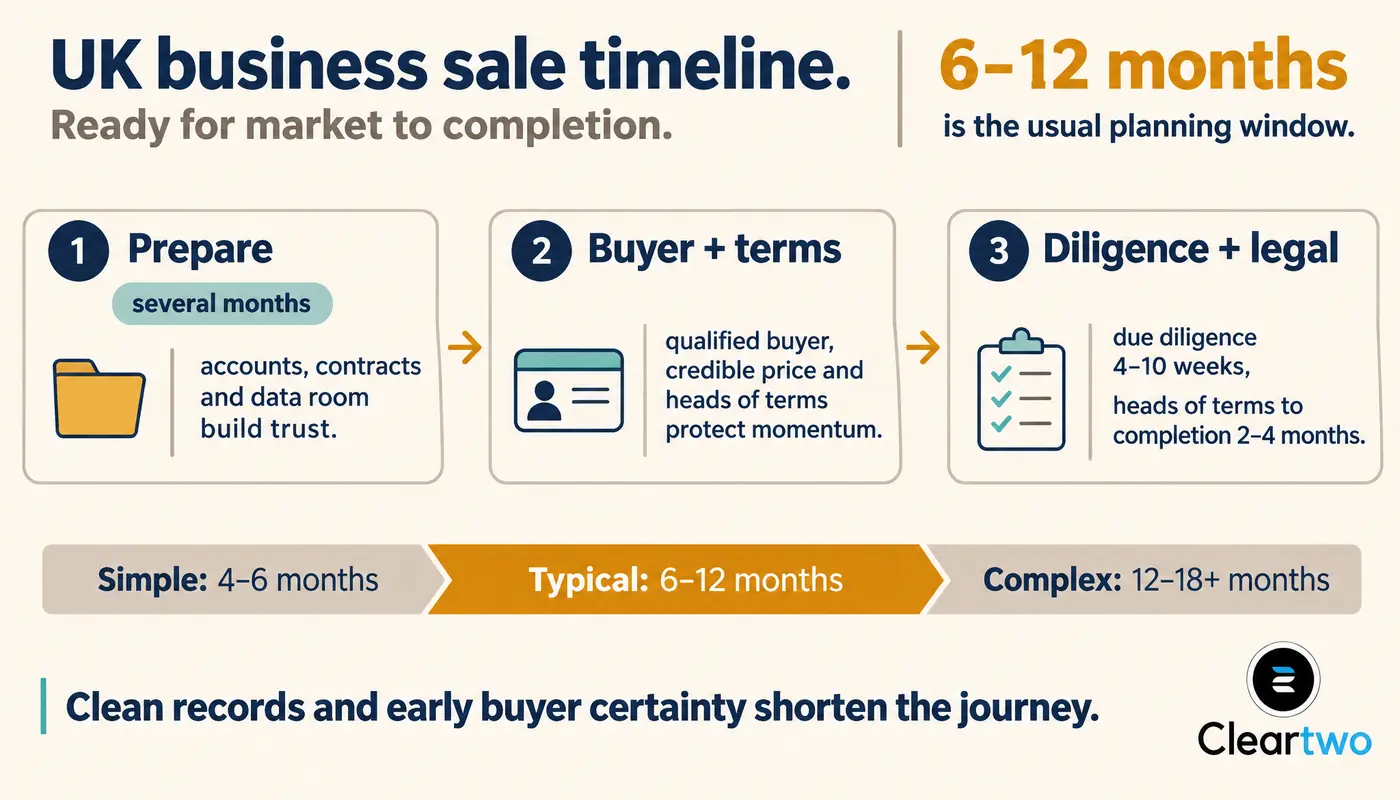
A realistic timeline to Sell a Business in the UK is usually split into three parts. Preparation can take several months. Finding and speaking with buyers can take a few more. The period from offer to legal completion can then take another two to four months.
The range is wide because people start the clock at different points. One owner counts from the day they first think about selling. Another counts from the day the business goes to market. A buyer may only count from heads of terms. This is the document that sets out the main deal points before lawyers prepare the final contracts.
A prepared, profitable and simple company may complete in 4 to 6 months. A typical small or medium sized business may take 6 to 12 months. A larger, regulated or less organised sale may take 12 months or longer.
What Affects The Speed Of A UK Business Sale
The speed of a sale depends on how easy it is for a buyer to trust what they are buying. Think about a gallery wall. If the frames are straight and the lighting is calm, people see the value quickly. If everything is packed away in boxes, they need longer to understand the picture.
What would a buyer see if they looked behind the scenes today? Size is one factor. A business with many staff, several sites, multiple shareholders, leases and complex contracts will take longer to review than a lean service business with clean accounts.
Sector matters too. A digital agency, ecommerce marketing business or IT support provider can be easier to understand than a heavily regulated company. Yet the sale can still slow down if contracts, data protection and staff records are unclear.
Profitability helps, but it is not the whole answer. Strong profit, recurring income and loyal clients build confidence. Yet even a profitable business can stall if the accounts are unclear, client agreements are informal or the founder holds every key relationship.
Buyer funding also affects pace. A cash buyer with clear decision making power can move faster than a buyer who needs lender approval. Deferred payments, earn outs and detailed deal structures can add time because both sides need to agree what happens after completion.
Preparing Your Business For Sale
Preparation is where the sale starts to take shape. It is the design stage before launch. It often decides whether the process feels smooth or stressful.
Start with your financials. Buyers usually want at least three years of accounts. They may also ask for recent management accounts, forecasts, tax records, debt details and clear notes on any unusual costs. A valuation also needs context. Buyers look beyond headline profit. They review recurring revenue, customer concentration, staff stability and how much work depends on the owner.
Paperwork matters as much as profit. Contracts, employment records, supplier agreements, licences, insurance, intellectual property ownership and data protection policies should be organised before serious talks begin. GOV.UK gives useful official guidance on responsibilities when selling or transferring a business, including employee and tax points, through its sell or transfer your business guidance.
Technology can also make a business more attractive when it supports the story clearly. If your agency uses CRM systems, business automation, reporting tools or AI driven processes to reduce manual work, show how those systems operate. Buyers like clear processes because they make the business feel less fragile.
Finding The Right Buyer
Finding a buyer is not only about telling the market that your business is for sale. It is about sharing the right story with the right people, while protecting confidentiality.
A strong buyer search usually includes a short information summary, a more detailed confidential document, buyer screening, non disclosure agreements and management meetings. The wording matters. If the sale materials are vague, buyers ask more questions. If the price feels unrealistic, serious buyers step back.
Different buyers move at different speeds. An individual buyer may be keen but need finance. A management team may know the business well but need backing. A strategic buyer may understand the sector quickly but need board approval. A buyer like Cleartwo, already active in digital, creative, CRM, IT and agency services, may be able to assess fit with more clarity when a digital agency is looking to be sold.
If you own an agency and want a more focused view, you can explore this guide on how long it takes to sell a UK digital agency. It looks at agency timing in more detail, including clients, retainers, people and delivery systems.
Offers And Heads Of Terms
Once serious buyers are interested, the process moves into offers and negotiation. This stage can take a few weeks. It can also take longer if there are several bidders, missing details or different views on value.
An offer is not always the final shape of the deal. It may include upfront cash, deferred payments, an earn out based on future results or conditions linked to client retention. The highest headline figure is not always the safest offer if it depends on too many future events.
Heads of terms set out the main points before full legal work begins. They usually cover price, deal structure, payment timing, exclusivity, conditions, warranties, completion accounts and handover expectations. Good heads of terms work like a thoughtful brand guide. They do not do the whole job, but they keep everyone working from the same plan.
Due Diligence And Legal Completion
Due diligence is often where UK business sales slow down. It is the buyer's detailed review of the company. It can cover finance, legal matters, tax, clients, operations, staff, technology and sometimes regulation.
For many smaller deals, due diligence may take 4 to 10 weeks. More complex deals take longer. If the buyer finds missing records, unclear ownership, weak contracts or unexplained figures, they will ask more questions. Each question adds another layer to the picture.
Legal completion is when the final sale documents are signed and the agreed transfer happens. In a share sale, the buyer takes over the company shares. In an asset sale, selected assets, contracts or parts of the trade transfer. Each route has different tax, employee and liability points, so sellers should take professional advice.
For digital agencies, buyers may also review hosting access, website security, analytics, project management tools, AI marketing tools, source files, licences and client permissions. Good digital housekeeping can make the difference between a calm handover and a tangled one.
How Cleartwo Keeps Deals Moving
Cleartwo approaches UK business and agency acquisitions with a practical and open mindset. The aim is not to force speed at any cost. It is to remove delays that can be avoided by asking the right questions early.
That means clear communication, early buyer qualification, structured document requests and direct talks about valuation, fit and completion expectations. When Cleartwo reviews a digital agency, it can look at both the commercial story and the operating detail. This includes clients, retainers, team structure, delivery methods, brand strength, development capability, ecommerce activity, CRM use, IT support and growth potential.
This matters because many delays come from uncertainty. If both sides know what is needed, who is responsible and when the next decision is due, the process feels more focused. Sellers who want to understand buyer fit can also read how to choose the right agency acquisition company in the UK before opening serious talks.
If your digital agency is ready for a new chapter, Cleartwo can have a confidential readiness conversation and explain what an acquisition process may look like. There is no need to dress the business up as something it is not. The aim is to understand the real story and decide whether there is a strong fit.
Common Reasons UK Business Sales Stall
Most stalled deals do not fail because one dramatic thing happens. They slow down because small unresolved details build up over time. Like clutter on a website, each point of friction makes the experience harder.
- Incomplete financial records
- Unrealistic price expectations
- Weak client contracts
- Founder dependent sales
- Buyer funding delays
- Unclear asset ownership
- Slow due diligence replies
Other causes include shareholder disagreements, property lease issues, undisclosed tax matters, falling performance during the process and poorly drafted heads of terms. The best defence is preparation. Resolve known issues before marketing and be honest about anything that cannot be fixed quickly.
How Sellers Can Reduce The Timeline
The fastest sale is rarely the one that starts in a hurry. It is the one planned with care. Start by organising a secure data room. This is an online folder where key sale documents are stored and indexed.
Keep monthly reporting consistent. Make sure your figures match across accounts, management reports, bank statements and tax filings. If there are adjustments to profit, explain them clearly. Buyers do not expect every business to be perfect, but they do expect the story to make sense.
Reduce founder dependence where possible. Introduce senior staff to client relationships. Document delivery processes. Show that the business can keep moving without you making every decision. If you use CRM systems, automation or AI driven tools, show how they support repeatable delivery.
Qualify buyers early. Ask whether they have funds, who makes the decision and whether they need lender approval. After heads of terms, agree a timetable for due diligence, legal drafting and completion. Momentum is easier to keep than rebuild.
Final Thoughts
Selling a UK business takes time because buyers need trust. They need clear numbers, clean records, strong contracts and a story that holds together. For most owners, 6 to 12 months is a sensible planning window.
For digital agency owners, the process can be more focused when the buyer understands agency work, client retainers, creative delivery, CRM systems and technical operations. If your digital agency is looking to be sold, Cleartwo can review the opportunity and discuss whether it is the right fit for acquisition.
Frequently Asked Questions
Can I Sell A Business In Three Months?
Yes, but only in the right conditions. A small, clean and well prepared business with a ready buyer may complete in around three months. Most UK sellers should allow longer.
How Long Does It Take After Heads Of Terms?
Many owner led UK deals take around two to four months from heads of terms to completion. Complex funding, legal issues, tax matters or missing documents can extend this.
Does A Profitable Business Sell Faster?
Profitability helps because it builds buyer confidence. It does not guarantee speed if contracts, accounts, staff records or ownership details are unclear.
What Stage Causes The Most Delays?
Due diligence and legal completion often cause the most delays. Missing records, slow replies and unclear deal terms are common reasons the process drags.
Can Cleartwo Buy My Digital Agency?
If your digital agency is looking to be sold, Cleartwo can review the opportunity and discuss whether it is a good acquisition fit. The process is confidential, practical and focused on clarity from the start.