

5 Key Graphic Designer Responsibilities In The UK
What are the real graphic designer responsibilities in the UK?
Let’s be real. Half the internet thinks designers just pick nice fonts and move logos around until someone says make it pop. That is not a job. That is chaos with colours.
Graphic designer responsibilities in the UK are tied to business goals, compliance, accessibility, and results. If you have worked with Cleartwo creative branding specialists, you already know this. Design is strategy. Not decoration.
If your brand was built quickly on Canva during lunch, fine. Budgets get tight. But here’s what’s actually happening. Your visuals are either building trust or quietly damaging it. Cleartwo helps UK businesses fix that properly.
Graphic Designer Responsibilities In Brand Identity
Obviously, this is where everything starts. If your brand identity is weak, the rest falls apart.
A UK designer builds a clear and consistent visual identity. That includes logo, typography, colour systems, imagery style, and brand guidelines. Not just a logo on a business card.
Does your website look like the same company as your social media? If not, you do not have a brand. You have confusion.
The brand identity process includes:
- Logo system design
- Colour psychology choices
- Typography hierarchy rules
- Visual consistency standards
- Usage guidelines
- Scalable design formats
- Consistency across platforms
If you want proof that logos matter, read what makes a strong logo. Adding a swoosh does not make you iconic.
Graphic Designer Responsibilities In Team Collaboration
Here is what actually happens behind the scenes. Designers do not sit alone in a dark room all day.
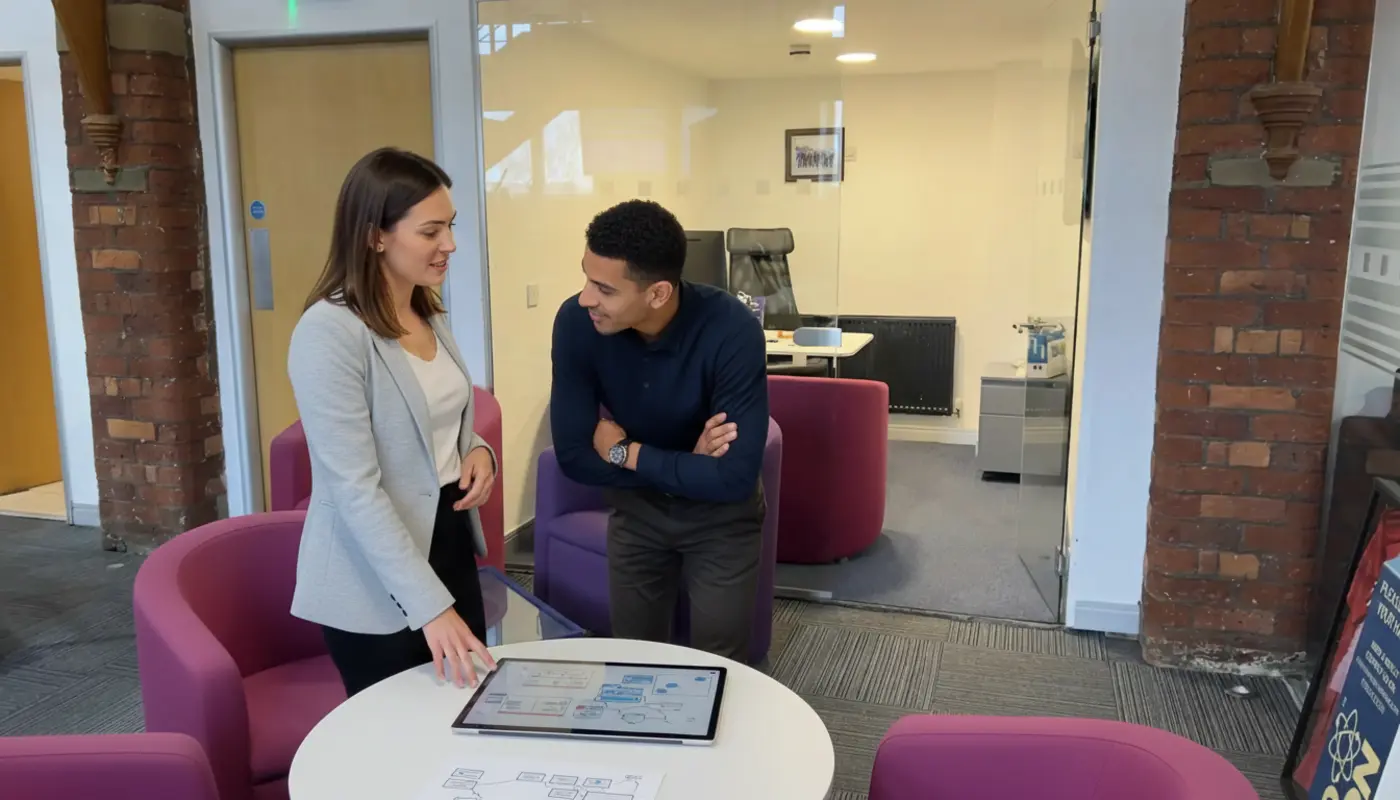
They work with marketing managers, developers, copywriters, and SEO teams. Especially on projects like web design and development.
Cut the nonsense. If design and marketing are not aligned, campaigns fail. It is that simple.

Designers also need to understand dashboards and CRM systems. They must know how visuals support conversions. If the design blocks sales, it is not creative. It is expensive art.
Graphic Designer Responsibilities In Print And Digital Assets
Yes, print still exists. Brochures did not vanish.
Designers create assets for websites, campaigns, email layouts, packaging, and social media. And they make sure those assets work in the real world.
Blunt truth. If your print files are set in RGB instead of CMYK, you are not ready for production. RGB is for screens. CMYK is for print. Get it wrong and your colours shift.
Designers must understand bleed, resolution, file formats, accessibility standards, and responsive layouts. For digital work, that means correct sizing and image compression. If your website loads slowly because of huge images, that is poor design prep.
Graphic Designer Responsibilities In Compliance And Standards
Stop pretending the brief does not matter. It is not optional.
Designers must read and question client briefs properly. Ask the hard questions early. Fixing mistakes later costs time and money.
They must also follow UK accessibility and copyright rules. Accessibility is not a bonus feature. Under the Equality Act, digital content must be usable for everyone.
The official WCAG guidelines from the W3C accessibility framework set global standards.
If your light grey text on a white background looks stylish but no one can read it, it is not premium. It is unusable.
When delivering WCAG accessibility services, designers must check colour contrast, font clarity, keyboard access, and inclusive imagery.
And copyright matters. Using random images from Google is not clever. It is risky.
Graphic Designer Responsibilities In Project Management And Growth
Here is what separates amateurs from professionals. Project management.
Designers manage timelines, revisions, feedback, and version control. Not just sending files and hoping for approval.
Miss deadlines and you lose trust. Deliver on time and you become essential.
Most teams use CRM systems and task boards. Call them fancy tools if you want. They only work if the designer manages the workflow properly.
Staying current also matters. Tools change fast. Modern designers use platforms like Figma and Adobe tools. If you want details, see what software graphic designers use today.
Trend awareness is important too. You can explore top UK design trends. But copying last year’s style is not innovation. It is laziness.
Continuous learning through workshops and structured programmes like digital skills development programmes keeps designers sharp. If you are not learning, you are falling behind. Simple.
Frequently Asked Questions
What Are The Main Graphic Designer Responsibilities In The UK
They include building brand identities, creating digital and print assets, managing projects, ensuring accessibility compliance, and working closely with marketing and development teams.
Do UK Graphic Designers Need To Understand Accessibility Laws
Yes. Designers must follow WCAG guidelines and UK equality standards so digital content is usable for everyone.
How Important Is Project Management For Graphic Designers
Very important. Meeting deadlines, handling revisions, and aligning with business processes are key parts of the role.
Do Graphic Designers Need To Understand Digital Marketing
Absolutely. Design supports marketing performance and conversion goals. Without that knowledge, visuals become decoration instead of strategy.
How Can UK Businesses Improve Their Brand Design
Work with experienced teams like Cleartwo. Align brand identity, user experience, accessibility, and digital strategy properly. No guesswork. No shortcuts.
Cut the nonsense. Graphic design is not about making things look pretty. It is about making businesses look credible, usable, and profitable.
If your visuals are not doing that, you already know what needs to happen next.
Author: Adam