
Digital Signage And Wayfinding
Let’s be honest. We have all walked into a hospital, campus, or shopping centre and felt lost. That is where digital signage steps in. It changes how people move through a space. It replaces static signs with live, clear directions. No confusion. No guessing. Just smooth flow.
How Digital Signage Enhance Wayfinding
Traditional signs get old fast. Departments move. Corridors close. Paper signs cannot keep up. Digital signage can. With digital signage systems and integrated signage platforms, organisations can push updates in real time. Maps stay current. Directions stay clear. That is the upgrade.

Why Wayfinding Matters
Wayfinding is more than arrows on a wall. It shapes how people feel in a building. Think about arriving at a hospital already stressed. Then you cannot find your clinic. That frustration builds fast.
Now flip it. Clear screens. Simple directions. Calm movement. That is better energy. Tools like content managed signage systems and live data integrations help buildings communicate properly. For a deeper look at operations, explore this detailed guide on digital signage in business.
Smarter Navigation With Digital Signage
Digital signage is not just a screen. It is an interactive tool. Users can search locations. They can view step by step routes. They can even sync directions to their phone.
With remote signage management, teams update content instantly. No printing. No taped notices. Just accurate information. That saves time and reduces stress for staff. Simple as that.
Interactive Touchscreens Improve Navigation
Touchscreen kiosks make navigation feel natural. Visitors tap, search, and go. It feels familiar. It feels modern.
- Interactive building maps
- Touchscreen navigation kiosks
- Live directions
- Mobile route syncing
- Multi language options
- Accessible route guidance
- Dynamic content updates
Best Places For Digital Wayfinding In The UK
Different spaces have different challenges. Digital signage adapts to each one. That flexibility is huge.
Hospitals And Healthcare Facilities
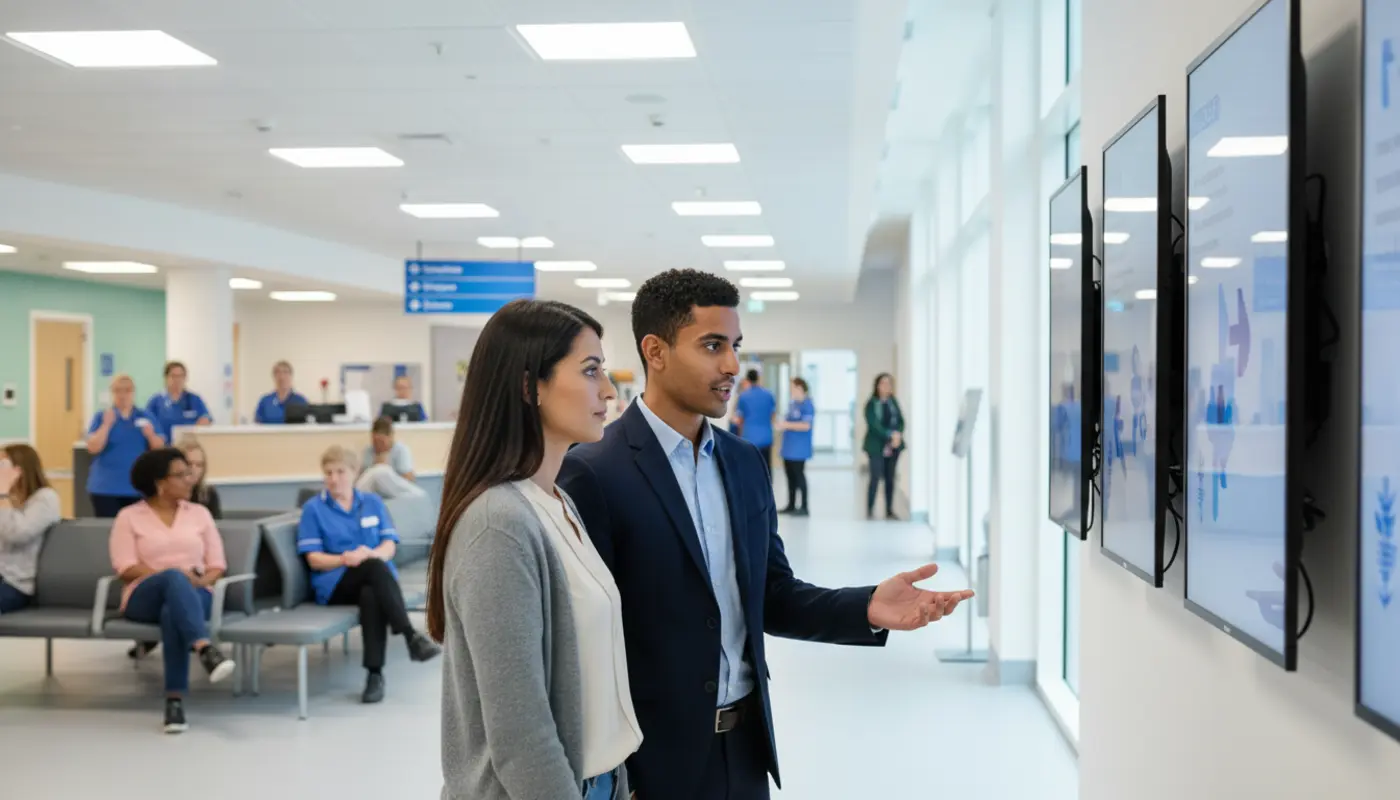
Hospitals are complex. Patients feel anxious. Staff are busy. Clear navigation reduces pressure for everyone.
The NHS highlights the need for strong wayfinding in its official NHS wayfinding guidance. Digital signage builds on that by adding live updates and clearer routes. Fewer missed appointments. Less disruption. Better flow.
Universities And Campuses
Campuses feel like small cities. New students arrive each term. Getting lost on day one is not the vibe.
Digital directories and kiosks guide students to lecture halls, libraries, and events. Pair that with smart UI design, and the whole journey feels smooth and current.
Transport Hubs And Airports
Timing matters in transport. Platforms change. Delays happen. Updates must be instant.
Digital signage shares live information. That reduces crowding and keeps passengers moving.
Retail Centres And Shopping Parks
In retail, navigation links directly to revenue. If customers cannot find a shop, they leave.
Clear directions keep people exploring for longer. That drives spending. For more ideas, see this blog on digital signage benefits.
Live Updates Improve Visitor Flow
Accuracy builds trust. When a lift breaks or a room changes, updates must be instant.
With AI driven signage content, organisations can push changes straight away. Fewer queues. Fewer repeated questions. More momentum across the building.
Integration With Building Systems
Digital wayfinding can connect with building systems and mapping tools. That makes it responsive.
Closed corridor. Busy area. Route change. Updates happen in real time. With cloud based infrastructure and CRM integrations, spaces start to feel smart instead of static.
Accessibility And Inclusion
Accessibility is essential. Not optional.
Voice guidance. High contrast screens. Multi language options. These features support people with visual or mobility needs. Public sector organisations must follow UK accessibility requirements. Solutions like WCAG compliant design services help meet those standards from day one.
Cost And Return On Investment
Let’s talk value. Digital signage is an investment, but the long term return is strong.
Printing costs drop. Staff interruptions reduce. Operations run smoother. Better navigation means fewer missed appointments and happier visitors. For more detail, read this blog on ROI in digital strategies.
Choosing The Right Setup
Not every system delivers the same results. The right mix includes reliable digital signage hardware, an easy CMS, and scalable infrastructure.
User experience is key. If a screen looks confusing, people ignore it. That is why UX design expertise matters. The goal is effortless navigation from the first tap.
AI Powered Wayfinding Trends
AI is pushing wayfinding forward. Personalised routes. Predictive navigation. Systems that learn patterns over time.
With AI driven solutions, buildings respond faster and smarter. Organisations that adopt early will set the pace. That is real momentum.
Conclusion
Digital signage transforms how people experience physical spaces. It improves flow. It supports accessibility. It strengthens daily operations.
With Cleartwo, organisations bring strategy, design, and integration into one connected system. The result is smart wayfinding that evolves as your space evolves. Let’s go.
Frequently Asked Questions
What Is Digital Wayfinding
Digital wayfinding uses interactive screens and smart software to guide people through buildings quickly and clearly.
How Does Digital Signage Improve Navigation
It provides live updates, interactive maps, and clear on screen directions that reduce confusion and save time.
Is Digital Wayfinding Suitable For Small Businesses
Yes. Even smaller spaces benefit from clearer navigation and a more professional visitor experience.
Does Digital Signage Support Accessibility
Yes. Features like voice guidance and high contrast displays make navigation more inclusive.
What Is The ROI Of Digital Wayfinding Systems
It lowers operational costs, improves visitor flow, and increases overall satisfaction over time.