

How To Optimise Website For Search Engines In The UK
Let’s be honest. Trying to optimise a website for search engines can feel overwhelming. Algorithms. Updates. Ranking factors. It sounds intense.
But here’s the truth. Once you understand the basics, it starts to make sense. If you want to rank on Google UK, attract the right traffic, and turn clicks into customers, you need a clear plan. That is exactly what we are breaking down here. And if you want expert support, Cleartwo SEO services are built to make the whole process smoother and far more powerful.
Understanding Google UK And Search Engine Ranking Factors
Google UK is not random. It follows a system. The core focus is relevance, authority, and user experience.
Google checks your content, backlinks, and technical setup. It also looks at how users behave on your site. Do they stay and read? Do they click around? Or do they leave straight away? If people like your site, Google usually does too. Simple as that.
If you want a deeper look at ranking signals, read this official Google SEO starter guide.
For strong results in the UK, you need content, technical strength, and trust working together. That is why many brands choose a professional SEO agency that understands UK search behaviour.

Keyword Research For UK Search Behaviour
Keyword research is where the momentum starts. No cap.
You need to know what people in the UK are actually typing into Google. Not what you assume. That guesswork is where many brands go wrong.
Use tools like Google Search Console to understand intent. Are users ready to buy? Are they comparing options? Or just learning? Intent shapes your content.
Most UK searches happen on mobile. People search on trains, during breaks, and between meetings. So clear answers win. Fast pages win. Long waffle loses. That is the vibe.
If you want to improve content quality, read this guide on writing great SEO content.
Match one main keyword to each page. Support it with related terms such as technical SEO checklist, local citations UK, and content E E A T signals. This builds strong topical authority over time.
On Page SEO To Optimise Website For Search Engines
On page SEO is low key powerful. Small changes can bring huge results. Honestly, this is where quick wins live.
Start with your title tags. Keep them clear and around 50 to 60 characters. Add your main keyword naturally. Then write meta descriptions that make people want to click. A higher click through rate sends strong signals to Google.
Use headings properly. One clear H1. Then structured H2 and H3 tags. Make the page easy to scan. No one enjoys a wall of text.
Add internal links to helpful pages like web design and development services and digital marketing solutions. This improves site structure and keeps users moving through your pages.
Optimise images too. Use clear alt text. Compress file sizes. Page experience matters more than ever. If you are unsure what to fix, follow this step by step SEO audit guide.
- Clear title tags
- Strong meta descriptions
- Logical heading structure
- Internal linking
- Keyword focused content
- Fast loading images
- Mobile friendly design
Technical SEO And Core Web Vitals In The UK
This is where strong brands stand out.
Site speed is massive. Google measures Core Web Vitals. These include loading speed, visual stability, and interaction time. If your site is slow, rankings drop. Users leave. That is not the energy we want.
Use reliable hosting. Secure your site with HTTPS. Optimise for mobile first indexing. Google now reviews most UK sites from a mobile view first.
If your setup needs improvement, explore managed hosting solutions and website security support.
Technical SEO also includes structured data. This is code that helps search engines understand your content. It can show extra details like reviews and FAQs in search results. More visibility. More clicks. Let’s go.
Building A Strong UK Backlink Profile
Backlinks still matter. A lot.
Think of them as trust signals. When respected UK websites link to you, Google sees authority. But quality always beats quantity.
Focus on digital PR, partnerships, and industry features. Build real relationships. That is how you grow credibility.
To learn more, read about key ranking factors in SEO.
Avoid spammy directories or paid link schemes. Shortcuts can harm your site and damage trust.
Local SEO In The UK With Google Business Profile
If you serve a town or city, local SEO is huge.
Optimise your Google Business Profile fully. Add correct contact details. Collect genuine reviews. Post updates often. Google rewards active and accurate listings.
Use local keywords naturally. For example, if you target Manchester, connect your content with SEO agency Manchester services. This sends clear location signals.
Create location pages that reflect real areas and services. Keep your name, address, and phone number consistent across UK directories. Consistency builds trust.
Content Strategy And E E A T For Search Engines
Content builds authority. It shows who you are and why you matter.
Google values E E A T. That means experience, expertise, authoritativeness, and trust. Add author details. Share case studies. Publish helpful guides.
Write for real people first. Not just algorithms. If your content solves problems, rankings will follow.
You can explore structured strategy ideas in this SEO ranking factors guide.
Cover related topics such as business automation, cloud CRM, AI driven solutions, and IT support for businesses. This builds strong topic clusters and boosts relevance.
SEO For UK Ecommerce Websites
If you run an online shop, SEO needs extra focus.
Optimise product pages with clear and persuasive descriptions. Add structured data so prices and reviews can appear in search results. That extra visibility can increase clicks fast.
Category pages should target broader search terms. Product pages should target specific buying keywords. Search intent matters more than ever.
If you are scaling, look at ecommerce optimisation services. Traffic is great. Revenue is better. Let’s be real.
Tracking SEO Performance In The UK
You cannot improve what you do not measure.
Use Google Search Console to track impressions, clicks, and average positions. Monitor Core Web Vitals. Review user behaviour carefully.
Check UK specific performance. Are you ranking better in one city than another? Are your local pages converting?
For deeper insight, explore analytics and reporting services.
If you want everything aligned under one clear strategy, Cleartwo helps UK businesses turn traffic into real results.
Frequently Asked Questions
How Long Does SEO Take In The UK?
Most websites see movement in three to six months. Competitive markets can take longer. SEO builds momentum over time.
Is Technical SEO Important?
Yes. If search engines cannot crawl or load your site properly, your content will struggle to rank.
What Are The Key Ranking Factors In The UK?
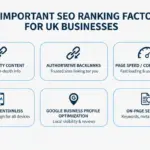
Content relevance, backlink authority, mobile optimisation, and strong user experience are major factors.
Do Small Businesses Need Local SEO?
Absolutely. Local SEO helps you appear in map results and nearby searches. That visibility can directly increase enquiries and sales.
Can I Optimise My Website For Search Engines Myself?
You can start with keyword research and on page improvements. But for faster and stronger results, working with specialists like Cleartwo removes guesswork and accelerates growth.
Search engine optimisation is not magic. It is strategy, consistency, and smart improvements. Start with the basics. Build authority. Track your progress. Keep going. You have got this.