

VoIP And Phone Lines
VoIP and regular phone lines both let you make and receive calls. The difference is how the call travels. VoIP sends your voice over the internet. A regular telephone line sends your voice through the old copper phone network. If you want help reviewing your current setup, Cleartwo can guide you through the move without the usual confusion.
Here's the thing. For UK businesses, this is not just a small phone upgrade. The old PSTN and ISDN networks are being retired, with the UK move now heading towards January 2027. You do not need to know every technical detail. You do need a clear plan.
Cleartwo helps businesses make this move properly. As a fully managed UK VoIP specialist, Cleartwo supports managed setup, UK based support, Teams voice integration, enterprise level features at SME pricing and a 99.99 percent uptime service level agreement.
How VoIP Differs From A Regular Telephone Line
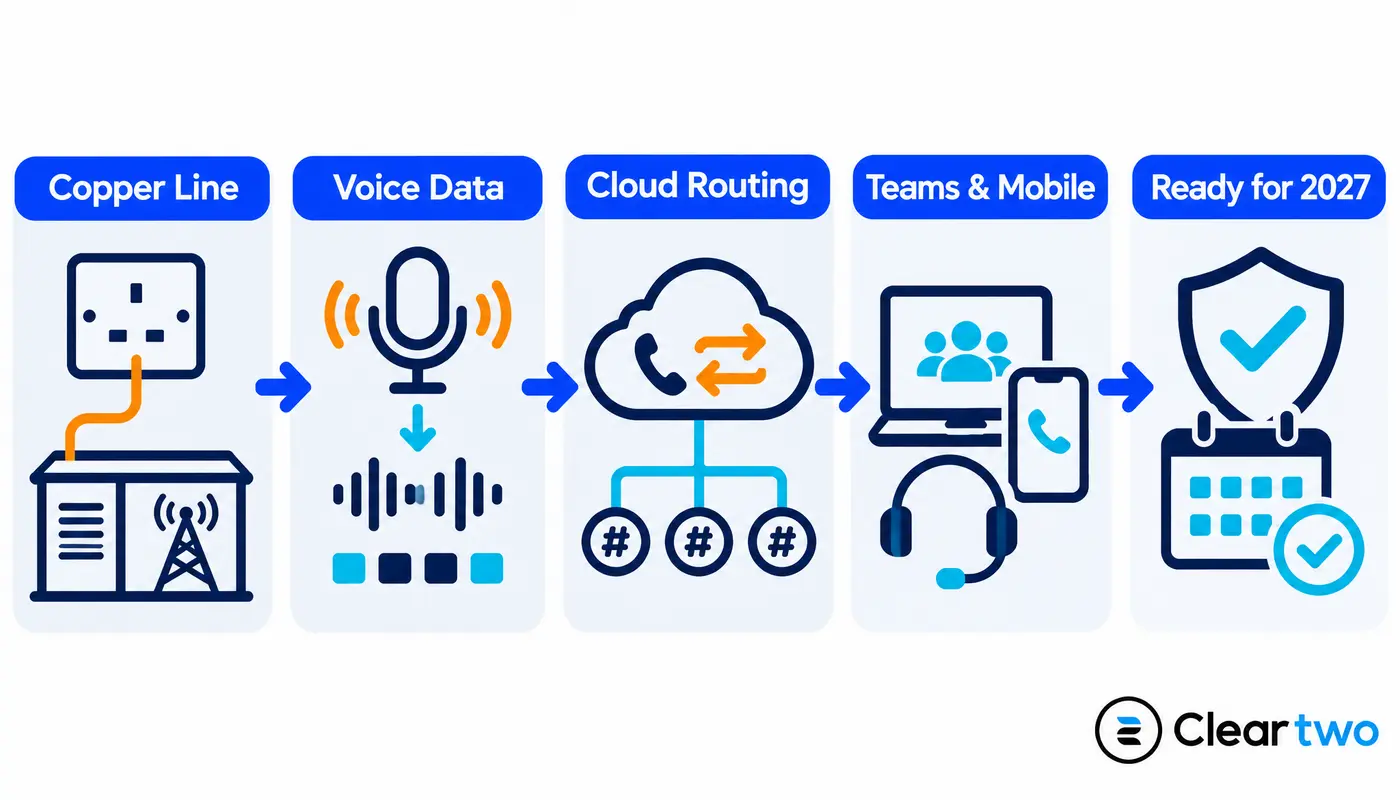
How is VoIP different from a regular telephone line? VoIP turns your voice into digital data and sends it through your broadband or business internet connection. A regular telephone line uses fixed copper lines and old exchange equipment.
On the ground, most business owners are not asking for deep telecoms theory. They want to know if calls will sound clear. They want to keep their number. They want lower costs. They also want staff to keep working during the change. Are your staff still tied to office phones, or do they need to answer calls wherever work happens?
What Is A Regular Telephone Line?
A regular telephone line is usually an analogue line that uses the Public Switched Telephone Network, often called PSTN. It runs through copper cables, local exchanges and fixed circuits that connect one caller to another.
Think of it like a dedicated route for one call. When you speak, your voice travels through the traditional phone network. It does not travel through your broadband. Older ISDN lines are also part of this older world. They support more call channels and were common in offices with a private phone system.
The challenge is simple. The PSTN is old, costly to maintain and not flexible enough for how businesses work now. UK Government updates and Ofcom guidance both confirm that landline calls are moving to digital technology. Businesses should not treat this as optional forever.
How VoIP Works Over The Internet
VoIP means Voice over Internet Protocol. In plain English, your voice is changed into digital data and sent over an internet connection. That data travels in small pieces called packets. It is then put back together at the other end.
This may sound technical, but the user experience is simple. You can make a call from an IP desk phone, a laptop app, a mobile app or Microsoft Teams phone. The person receiving the call does not need to know you are using VoIP.
A hosted business phone system can manage your numbers, call queues, voicemail, call recording and call routing from the cloud. That is why VoIP often sits inside a wider communications setup. It brings calling, messaging, meetings and team working into one managed service.
Daily Business Use With VoIP
The biggest daily difference is flexibility. A regular telephone line is usually tied to a building, a socket and fixed equipment. VoIP is tied to your internet connection, user accounts and cloud phone system settings.
That means your team can answer calls in the office, at home, on mobile devices or inside Microsoft Teams. You can also move numbers between sites, add users faster and build call flows without waiting for old style line work.
The real talk is this. VoIP is not magic. It needs good broadband, a good network setup and proper support. But when it is set up properly, it gives businesses far more control than a regular telephone line. If you are worried about downtime or losing your number, that is normal. The right migration plan deals with those risks before anything is moved.
Call Quality And Reliability
VoIP call quality can be excellent, but it depends on the network behind it. A regular telephone line had one clear strength. It did not rely on your office broadband or local router in the same way.
With VoIP, quality depends on bandwidth, latency, jitter and packet loss. Bandwidth is your available internet capacity. Latency is delay. Jitter is uneven delivery of voice data. Packet loss means small parts of the call fail to arrive.
That sounds like a lot, but it is manageable. Business grade broadband, wired phones, quality routers, correct firewall settings, mobile failover and power backup can make VoIP reliable in real business use. Cleartwo also supports businesses with network readiness checks. These checks matter more than most people realise. Before you move, ask one simple question. Is your internet connection ready to carry your calls properly?

Cost Differences Between VoIP And Regular Lines
VoIP often costs less than regular telephone lines, but the saving depends on your current setup. A traditional system may include line rental, call charges, PBX maintenance, engineer visits, handset costs and separate tools for remote workers.
VoIP usually works through user or channel subscriptions. You may also need broadband checks, handsets, headsets, number porting and optional features such as call recording or CRM integration. That is why you should compare the total cost, not just the monthly line rental.
For example, a 10 user SME might reduce costs by removing old PBX maintenance, cutting call charges and using softphones for hybrid staff. Some businesses see strong savings. But the honest answer is this. The best result comes from checking what you already pay for, then building the right replacement.
We worked with a UK business that had office phones, remote staff and too many missed calls. They wanted to keep their main number, avoid disruption and give their team a better way to answer calls outside the office. After moving to VoIP, their number stayed the same. Calls routed to the right people. Managers could see missed calls instead of guessing what had happened. Nothing fancy. Just a system that worked on the ground.
You can also read Cleartwo's practical guide on VoIP and landline cost comparison if pricing is your main concern.
Features A Regular Line Cannot Match
A regular telephone line is good at basic calls. VoIP goes much further. It supports the modern business phone features that UK teams now need, especially in sales, service, finance, healthcare, recruitment and multi site operations.
With the right business VoIP phone system, you can build better customer journeys. Calls can go to the right department. They can be recorded where suitable. They can appear inside a cloud CRM. They can also follow staff across devices.
- Call routing rules
- Voicemail to email
- CRM screen pop
- Secure call recording
- Mobile working apps
- Teams voice calling
- Live call analytics
This is where VoIP starts to support the wider business, not just the phone system. Your sales team can follow up faster. Your support team can see customer history before answering. Your managers can spot call patterns and fix gaps before they cost revenue. That is the real benefit. Better communication, fewer missed chances and a cleaner experience for your customers.
The PSTN Switch Off
The PSTN switch off matters because regular telephone lines are being retired across the UK. Businesses still using analogue lines, ISDN, old PBX equipment, fax machines, lift phones, alarms, door entry systems or payment terminals need to check what relies on the old network.
Do not leave this until the last minute. Migration takes planning. You need to know your phone numbers, call flows, connected devices, broadband capacity, recording needs and backup plans. Do you know which devices still rely on your old line?
If that feels like a lot, that is completely understandable. Most business owners do not have time to map every socket, alarm and line. That is exactly why a structured review matters. You do not need to become a telecoms engineer. You just need the right people checking the right details.
For a deeper migration checklist, Cleartwo has a useful article on the PSTN switch off for UK businesses. It is worth reviewing before you make any buying decision.
How Cleartwo Replaces Regular Lines
Cleartwo starts with discovery. That means reviewing your lines, numbers, handsets, PBX, sites, users and any devices that still depend on analogue connections. This step is not glamorous, but it prevents issues later.
Then comes number porting. In most cases, businesses can keep their existing phone numbers, but ownership and eligibility must be checked first. Cleartwo plans the port around your working hours, tests inbound and outbound calls, and keeps fallback routing ready where needed.
The next step is call flow design. This is where you decide how calls should move through reception, sales, support, accounts, out of hours messages and voicemail. The goal is not just to copy the old system. The goal is to make it better.
Cleartwo also recommends CallSwitch One where it is the right fit. Cleartwo manages the setup, migration and support, while CallSwitch One powers part of the service platform. That means you get strong platform features, practical guidance, competitive pricing and support from a team that understands the full business setup around your phones. You can learn more about CallSwitch One directly, while Cleartwo handles the practical work around it.
Microsoft Teams Phone And CRM Integration
Many businesses already use Microsoft Teams every day. But Teams chat and meetings do not automatically replace a full business phone system. For external calling, you still need the right voice setup, numbering, routing and support.
VoIP can connect with Microsoft Teams phone using managed voice services. It can also connect with CRM platforms. This means staff can click to dial, see customer details during calls, log activity and review recordings. That saves time and improves follow up.
If your team works across sales, support and operations, this is where VoIP becomes more than a phone line. It becomes part of your customer experience. For managed setup, you can explore Cleartwo's VoIP phone system services.
Choosing Between VoIP And A Regular Line
For most UK businesses, the question is no longer whether a regular telephone line will last forever. It will not. The better question is how to move to VoIP in a controlled way.
Before deciding, ask what you currently use. Check how many numbers you have. Look at how many calls happen at the same time. Review who works remotely, what needs recording and what happens if your internet or power goes down. Also check alarms, lifts, fax lines and payment devices.
If your business has multiple sites, compliance needs, Teams users, CRM integration, call recording or limited internal IT time, a managed VoIP service is usually the safer route. Let me break this down simply. The phone system is too important to guess your way through migration.
Final Thoughts
VoIP is different from a regular telephone line because it is internet based, flexible and built for modern working. It can reduce old phone costs, support remote teams and connect with tools your staff already use.
The key is planning. Check your numbers, broadband, devices and call flows before you move. If you get that right, the change is smoother. Your team can keep working, your customers can still reach you, and your phone system can support the way your business actually runs.
Frequently Asked Questions
Will VoIP Replace My Regular Telephone Line Before The PSTN Switch Off?
Yes. VoIP is one of the main replacements for regular telephone lines as the UK moves away from PSTN and ISDN. Businesses should plan before January 2027, especially if they have old PBX systems, alarms, lifts, fax lines or payment terminals connected to analogue lines.
Can I Keep My Existing Business Phone Number With VoIP?
In many cases, yes. Your existing business number can often be ported to VoIP, as long as ownership and porting rules are confirmed. A managed provider like Cleartwo checks eligibility, schedules the transfer, tests calls and plans fallback routing so customers can still reach you.
Is VoIP Cheaper Than A Regular Telephone Line?
VoIP can be cheaper because it may reduce line rental, call charges and old PBX maintenance costs. Savings vary by call volume, users, hardware, support and features. The best way to know is to compare your current bills against a designed hosted VoIP setup.
Does VoIP Work With Microsoft Teams Phone?
Yes. VoIP can work with Microsoft Teams phone when the right voice setup is in place. This allows staff to make and receive external calls through Teams, while still using business numbers, routing, call queues and support from a managed phone provider.
Is VoIP Call Recording Compliant For UK Businesses?
VoIP can support compliant call recording, but compliance depends on how it is set up and managed. You need clear policies for consent, retention, access permissions, security and deletion. Regulated sectors should review GDPR and industry rules before enabling recording across the business.