
Introduction
In the era of digital-first, attracting and keeping customers is no longer a matter of showing products alone-but organizing immersive, personalized experiences that stick on the customers’ minds. Digital signage interactivity is a creative move for companies to be ahead of competition and to deepen the customer contact and involvement.
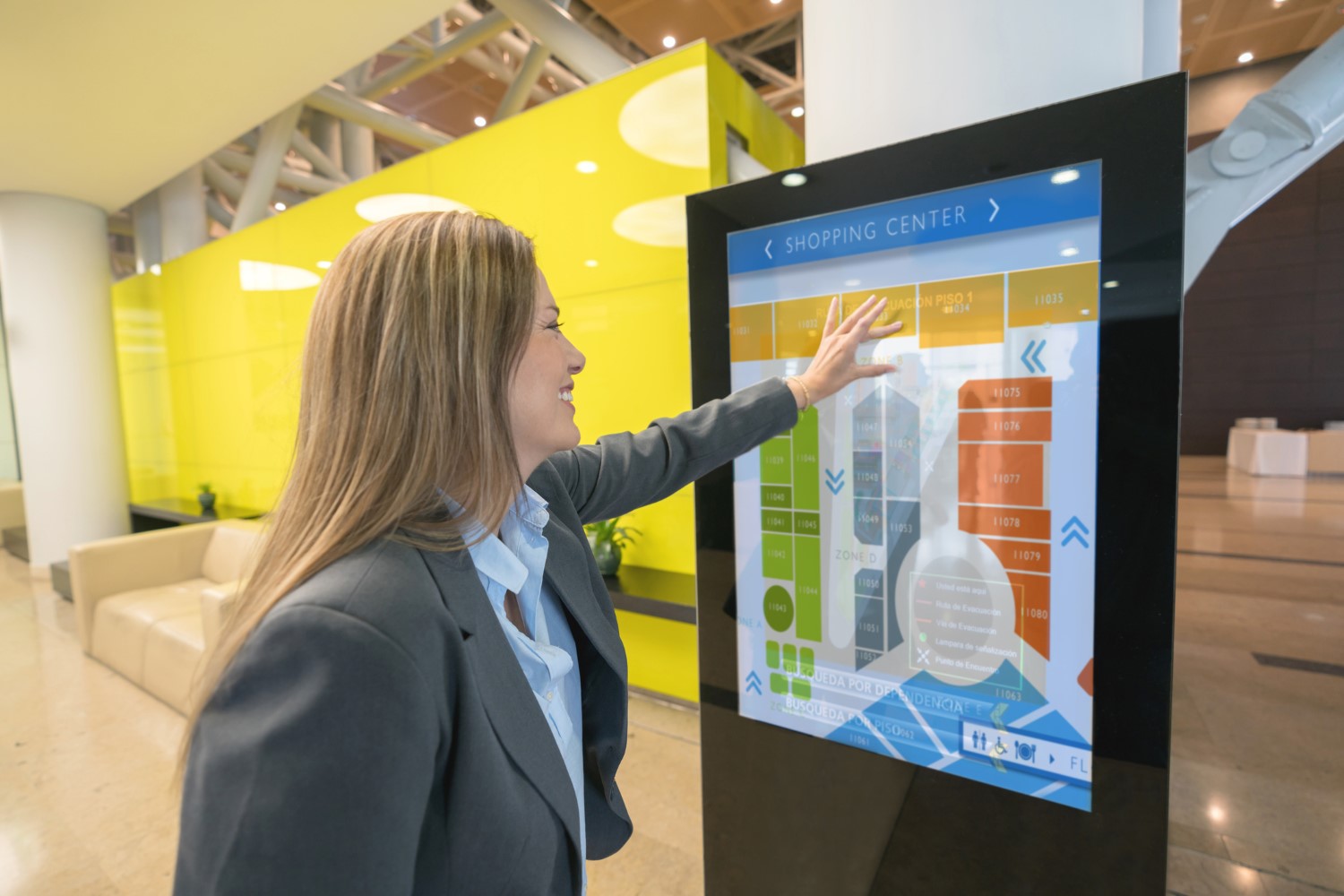
Contrary to the common signage boards, interesting digital signage is the set of advanced interactive devices such as touch screens, motion sensors, QR codes that makes it possible for customers to be actively engaged with the content. Such forms of attracting attention also promote curiosity, learning, and action which would help the business to keep customers and also increase sales.
How Interactive Digital Signage Enhances Customer Interaction
1. Touchscreen Kiosks for Exploration
Interactive kiosks are a means for shoppers to independently view, product check, and personalize options without the intervention of staff. This is very empowering to people since they become the ones making the decision of what they want to buy, and consequently they get to stay engaged with the activities for longer time.
Example: A clothing retailer installs kiosks allowing visitors to mix and match outfits virtually before fitting it on.
2. QR Codes and Mobile Integration
QR code is one technology that can be connected to digital signage, bridging the physical and virtual environments. With their smartphones, customers can scan them to get product details, discounts, or loyalty programs.
Example: A cafe hangs a QR code that presents the current seasonal menu as well as a mobile ordering platform.
3. Gamification for Engagement
Interactive media can create games, quizzes, or challenges for the audience to have fun with while at the same time selling the products or services. Gamification fosters forwarding, social media talks, and more lasting interaction.
Example: A store has a trivia game on a touchscreen kiosk and gives discount codes as rewards.
4. Personalized Recommendations
Progressive digital signage facilities are able to use AI and analytics for the presentation of tailored content to single users such as the location of the user, the time, and previous user interactions. The personalization of information creates a far more meaningful experience which is also engaging.
Example: Suggesting accessories based on a customer’s prior purchases or browsing behavior.
5. Interactive Product Demonstrations
Touchscreens and motion-sensitive displays allow customers to interactively explore the product, view explanatory videos, or do a products comparison. Customers get informed and are more confident about their choosing and buying decisions.
Example: A gadget store demonstrates interactive displays of smartphones, their apps, and accessories.
6. Social Media Integration
Showing real-time social media feeds or user-generated content encourages customers to participate both in the physical shop and online. Interactive activities, such as voting for favorite products or sharing pictures, strengthen further involvement.
Example: A restaurant exhibits Instagram posts tagged with their site to allow their customers to visualize and share experiences together instantly.
7. Customer Feedback Collection
Interactive digital signage makes it possible to get instant customers’ reviews not only effectively but also it brings businesses accurate data. This way it involves users and helps in the improvement of services and products.
Example: A hotel employs a touchscreen at the time of check-out to collect quickly the guests’ satisfaction rating or their suggestions.
Benefits of Interactive Digital Signage
-
Higher Engagement: When customers are taking part in the computation rather than only viewing the output the engagement is higher.
-
Increased Sales: Personalized product recommendations and product demos that drive to close.
-
Enhanced Customer Experience: The interactions that were creative and interesting were memorable.
-
Valuable Insights: Feedback, analytics, and all that data help to fine-tune marketing plans.
-
Brand Differentiation: Creative engagement methods make your company standout from the rival businesses.
FAQs About Interactive Digital Signage
Q1: Which businesses benefit most from interactive digital signage?
A: Retail stores, restaurants, hotels, healthcare providers, corporate offices, and entertainment venues all benefit by enhancing customer engagement.
Q2: Is interactive digital signage expensive?
A: Prices differ according to the size, technology, and features. Even smaller scale interactive displays can return ROI with increased engagements and sales, which is why many firms find it advantageous.
Q3: How can I measure interaction success?
A: Employ metrics such as screen touches, QR code initiations, dwell periods, conversion rates, and social media involvement to monitor performance.
Q4: How often should content be updated on interactive displays?
A: Frequent updates—day-to-day for promotions, week-to-week for new content, and seasonally for campaigns—will ensure that the signage remain appealing and on point.
Conclusion
Through interactive digital signage, traditional screens are artificially transformed into interesting customer-centric experiences. Using devices like touchscreens, gamification, personalization, social media integration, and real-time feedback, businesses create deeper connections, inform their audience, and drive revenues.
In a hard-working market, digital signage interactive is not just a tool it’s also a trick to create real customers, involved them in marketing campaigns before and stimulate sales even more.