
How To Convert Script Into Graphic Design
How do you convert a script into graphic design. You begin by listening. Not just to the words. But to the feeling behind them.
A script is not just text on a page. It holds intention. It carries rhythm. It reveals emotion. Your role is to turn that invisible energy into something people can see and feel.
This is where creativity meets strategy. When done well, design becomes the bridge between message and memory. At Cleartwo, this process shapes strong branding and clear visual communication.
Understanding The Brief To Convert Script Into Graphic Design For UK Brands
Before designing anything, pause. Read the script slowly. Then read it again.
Ask simple questions. What is the core message. Is it reassurance. Urgency. Inspiration. For UK audiences, tone matters. Subtlety often works better than noise. Trust grows through clarity.
When working on creative branding projects, alignment comes first. What does the brand stand for. How should people feel. If the script speaks about innovation, the design should feel modern. If it speaks about heritage, the visuals should reflect tradition.
Start with focus:
- Main message
- Target audience
- Emotional response
- Brand personality
- Call to action
- Platform plan
- Visual tone
Every detail matters. This is where visual thinking begins.
Breaking Down The Script And Finding Visual Cues
A script is like a map. Inside it are visual signals waiting to be uncovered.
Highlight strong words. Notice repeated ideas. Mark emotional phrases. These become anchors for layout ideas and storyboard sketches.
If a script says, We guide businesses through digital transformation, what does that suggest. A path forward. A bridge. A clear horizon. These images help shape direction.
When developing assets for digital marketing solutions, scripts are often divided into visual beats. Each sentence becomes a frame. Each idea becomes a scene.
Research from Adobe Creative Cloud shows that early sketching improves clarity before moving into digital tools. It is not about software first. It is about seeing the idea clearly.
Storyboarding Techniques To Map Scripts Into Visual Narratives
Storyboarding gives structure to creativity. It turns words into a clear visual journey.
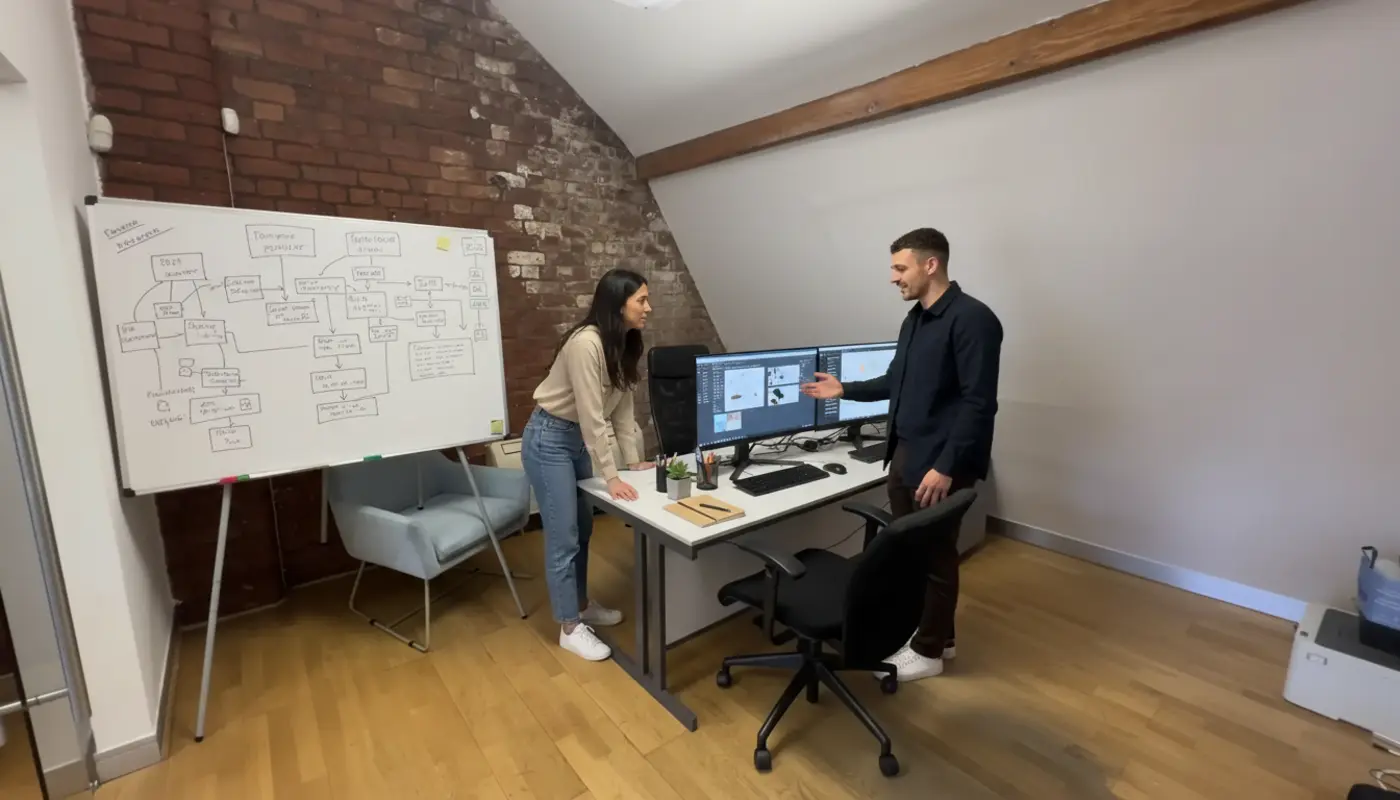
Divide the script into small scenes. Ask one question for each part. What should the audience feel at this moment.
For projects involving motion graphics and animation, rough sketches come first. Simple shapes. Quick lines. Focus on flow, not perfection.
For static campaigns such as collateral and packaging designs, storyboarding becomes layout planning. Headline placement. Supporting copy. Clear visual hierarchy that guides the eye.
If you want to explore this process further, Graphic Design Fundamentals: From Concept to Creation explains how ideas grow into cohesive systems.
Without structure, design becomes guesswork. With structure, it becomes intentional.
Choosing The Right Format For Script Based Projects
Not every script suits the same format.
Data heavy scripts often work well as infographics. Emotional stories may suit motion design. Short and bold scripts can become striking social visuals.
For UK brands investing in ecommerce solutions, format shapes engagement. A product launch script might become an animated reveal. A values driven script could become a strong manifesto page.
Design with intention. Let the script guide the medium.
Typography And Tone In Script Visualisation
Typography carries emotion.
A financial script needs stability. A lifestyle script may need energy. Fonts speak before the words are fully processed.
In UK campaigns, serif fonts often signal trust and heritage. Sans serif fonts feel modern and clean. Script fonts add personality but need careful use.
If the script is bold, the headline font should reflect that strength. Body text must stay readable. White space gives breathing room. It allows the message to settle.
For brands refining identity through branding and identity development, typography is not decoration. It is voice made visible.
Colour Psychology In UK Graphic Design
Colour shapes feeling.
Blue builds trust. Green feels calm. Red creates urgency. Yellow suggests optimism. These choices influence perception in quiet but powerful ways.
In sectors such as finance or healthcare, UK audiences often respond to calm and professional palettes. Retail may use brighter contrast to create energy.
If you want to explore this further, Mastering Colour Theory in Graphic Design explains how colour affects behaviour and decision making.
Every script has an emotional tone. Your palette should reflect it.
Working With Copywriters And Art Directors
Design is collaborative.
Stay close to the copywriter. Clarify meaning. Small visual changes can shift interpretation.
Art directors hold the wider vision. They ensure every element feels cohesive and aligned with the brand story.
When design sits within digital systems, clarity is vital. Visual storytelling should simplify ideas, not complicate them.
Tools And Software Designers Use
Once the concept is clear, tools support execution.
Adobe Illustrator, Photoshop, After Effects, and Affinity Designer help bring ideas to life. Collaboration platforms keep feedback organised.
When working alongside web development projects, assets must be prepared carefully. Responsive layouts, accessibility, and performance all shape the final result.
Tools assist the process. Designers create the meaning.
Adapting Script Based Design For Multiple Channels
A script rarely stays in one place.
It may begin as a website banner. Then move to social posts. Then into print. The message stays consistent even as the format changes.
A detailed infographic may need simplification for Instagram. A motion piece may need captions for accessibility.
For brands growing through social media marketing strategy, consistency builds recognition. Cohesion builds trust.
Client Approval And Revisions
Revision is part of refinement.
Teams often present mood boards first. Then storyboard drafts. Then polished visuals. Each stage gathers feedback before moving ahead.
When you explain why a colour or layout was chosen, clients feel confident. Intentional design creates reassurance.
This steady rhythm keeps projects focused and aligned.
Frequently Asked Questions
What Is The First Step In Converting A Script Into Graphic Design
Understand the emotion behind the words. Clarify the message, audience, and desired feeling before exploring visuals.
How Do Designers Choose Between Infographics And Motion Graphics
It depends on the narrative. Data focused scripts suit infographics. Story led scripts often work better in motion.
Why Is Typography Important In Script Visualisation
Typography shapes perception. The right font pairing strengthens connection. The wrong one weakens impact.
How Do You Maintain Message Integrity During Design
Stay collaborative. Review often. Make sure every visual choice reflects the original intention.
Can Script Based Designs Be Used Across Multiple Platforms
Yes. With clear planning and responsive design, one script can support digital, print, and social campaigns.
Converting script into graphic design is creative translation.
Words become colour. Sentences become structure. Emotion becomes experience.
Tell a story. Design with intention. Let's create something beautiful.